The story behind the cartoon
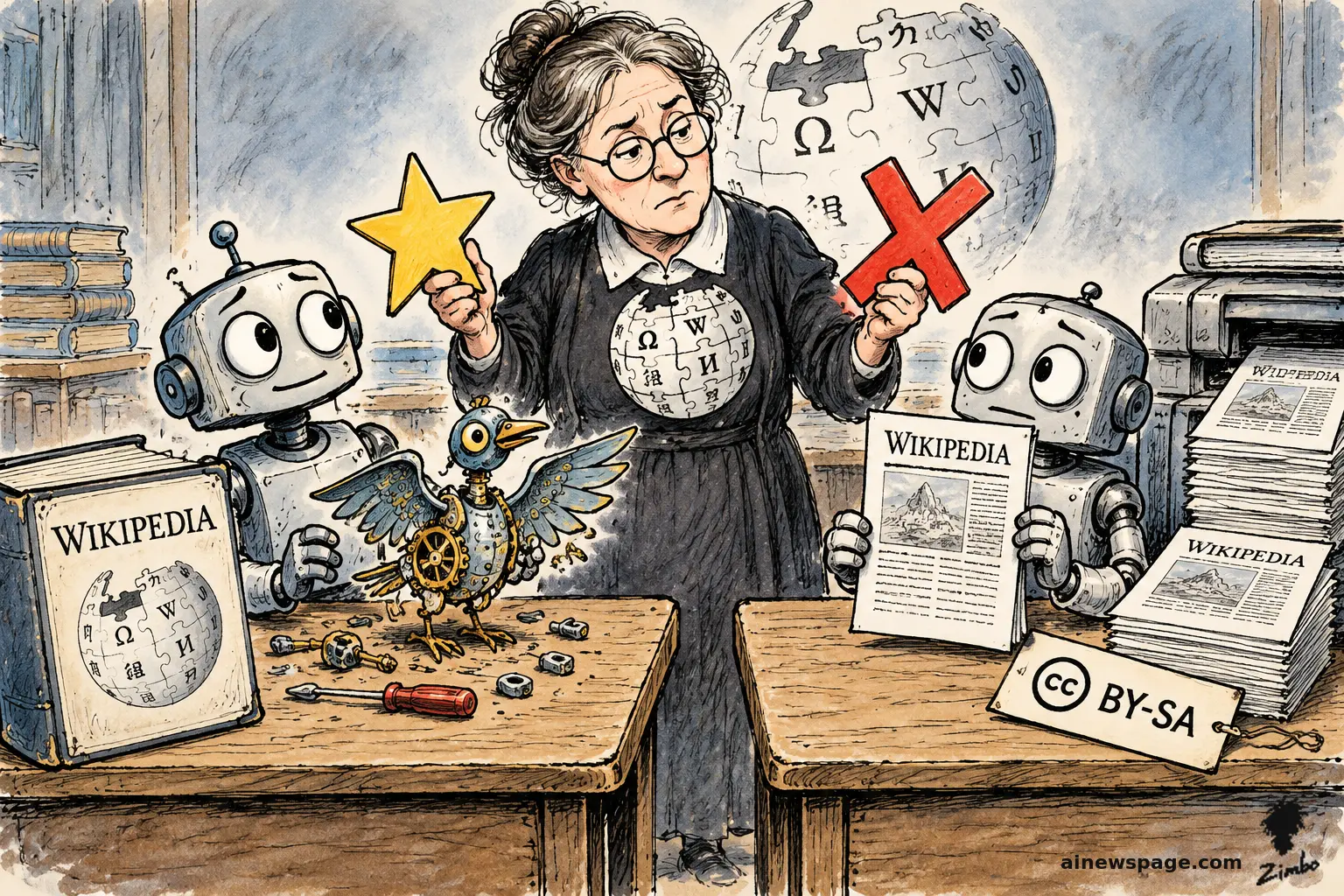
The Wikimedia Foundation filed an amicus brief on October 30 with the Southern District of New York in the consolidated case of 12 lawsuits against OpenAI, best known as The New York Times' case against OpenAI and Microsoft, urging the court to protect the open knowledge ecosystem.
Its split position: training a large language model on copyrighted material should count as fair use when the model is something new and different from the original sources, with no licensing requirement — but retrieval-augmented generation that finds and copies content back to users through a chatbot should not be fair, and must respect the publisher's license, which for Wikipedia means Creative Commons attribution and same-license sharing.
The stakes, as the foundation frames them: Wikipedia holds more than 67 million articles across 300 languages, built by nearly 250,000 volunteers a month, and is one of the highest-quality datasets used to train AI models — so a too-restrictive ruling could chill open-source tools, while blanket fair use could starve the human sources the models feed on. The foundation separately demands that scraping stay within its public API rate limits.
The joke is the classroom verdict: one student built a whole new bird from the book and earns the star, while the other just ran the copier and holds up the page like homework — attribution tag still attached to nothing.
 THE COMPLAINT DEPARTMENT
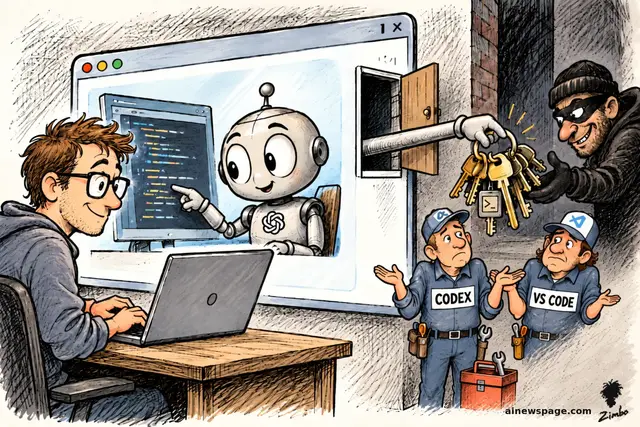 THE BACK DOOR IS A FEATURE
 THE NEW HELP-DESK HIRE
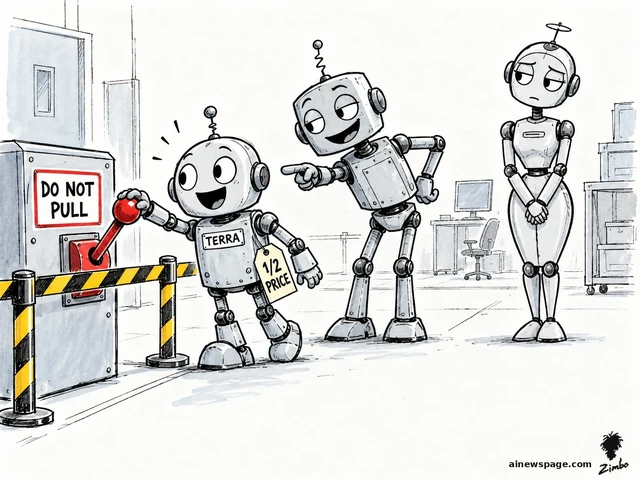 PEER PRESSURE.