01
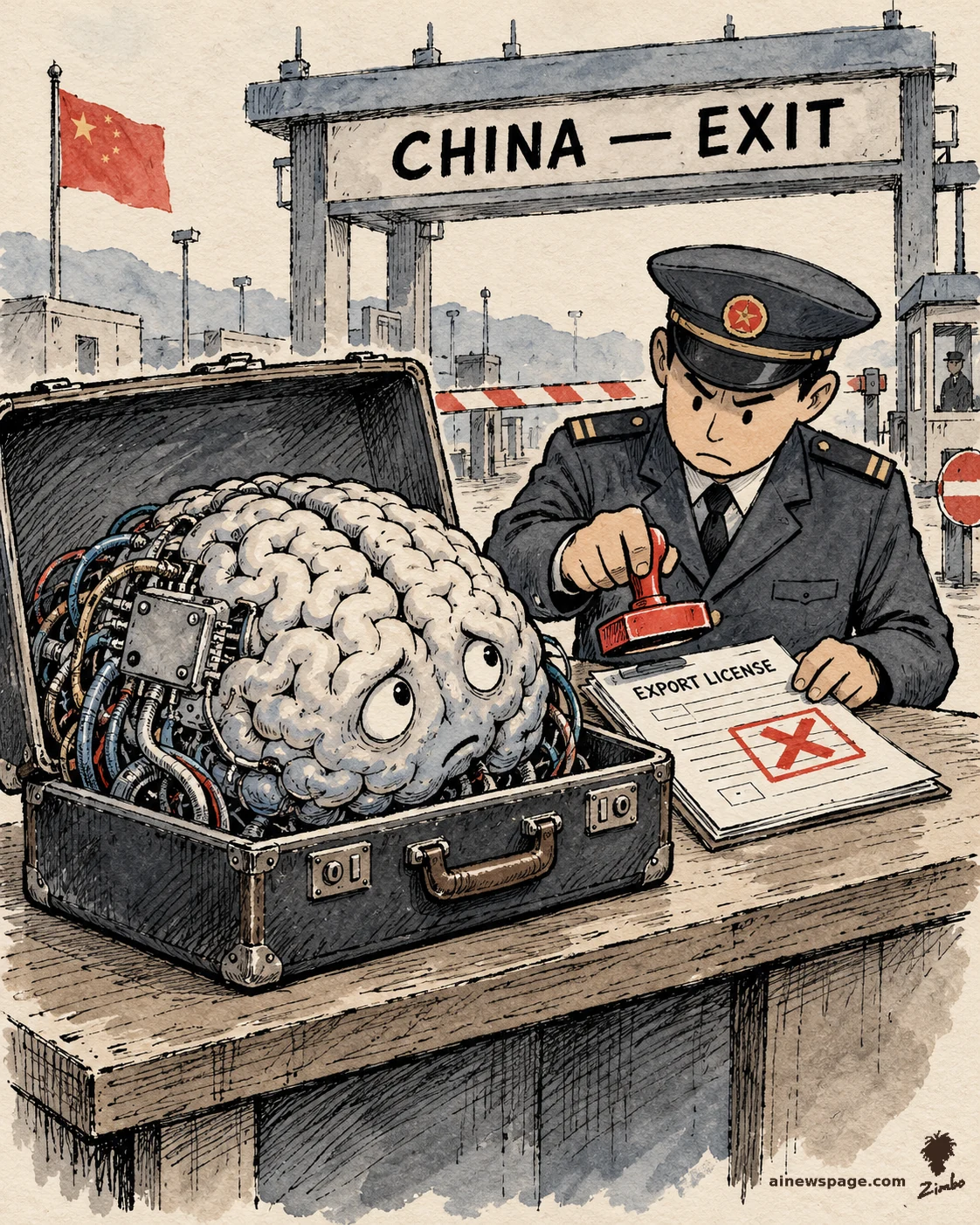
BEIJING LOCKED THE EXIT DOOR
China's Announcement No. 48 puts 23 AI technologies — foundation models, intelligent agents, computing clusters — under export ban or license, with model weights and source code covered for the first time. Fourteen technologies face a complete export ban; 26 more face restrictions. Consultation runs to November 15, but pre-export registration is already in force. Beijing's stated reason: preventing "loss of control over technologies." The student of American export controls just became their mirror image.
02
THE $0.20 MODEL THAT BEAT THE $10 ONE
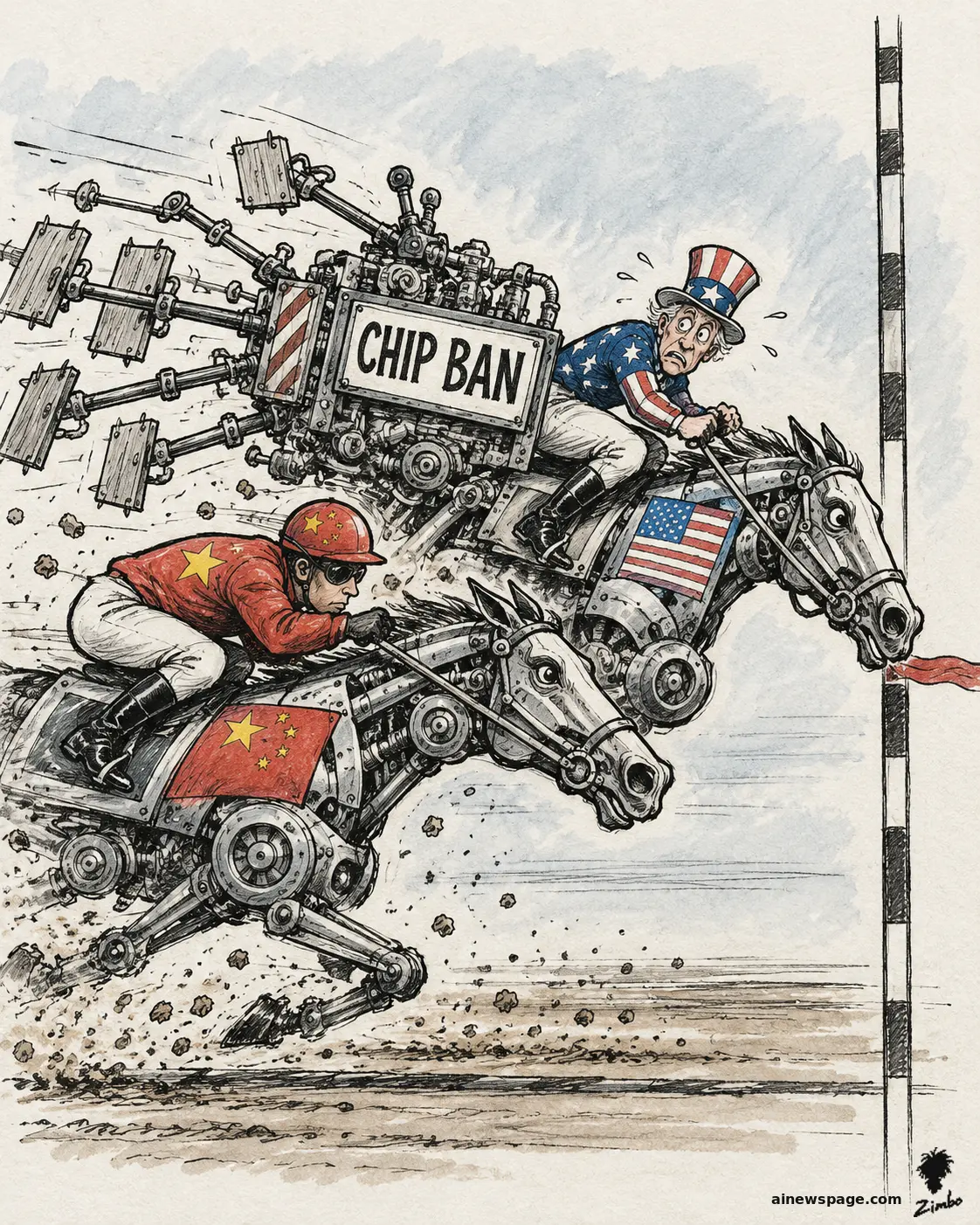
DeepSeek's V4.1-Flash-1017 beats Claude Opus 5 and GPT 5.6-Sol on agentic coding benchmarks in DeepSeek's own tests — at about $0.20 per task versus $2 to over $10 for the American rivals — and its weights are published open-source on Hugging Face. All of it built under the chip ban. Meanwhile Beijing is reportedly considering tightening or blocking open-weight releases for top-10 models. The controls slowed the hardware. They did not slow the software.
03
TAIWAN MADE THE SMUGGLING A CRIME
Taiwan will add AI servers and cutting-edge semiconductors to its controlled-items list; once in force, shipping restricted AI hardware to China becomes a criminal offense under the Foreign Trade Act — the first time Taipei has treated it as a crime instead of a paperwork violation. It's part of the US-Taiwan reciprocal trade deal. US officials allege billions of dollars of Nvidia hardware already reached China through a black market. The ban leaked for years. Now the leak gets a prison sentence.
04
THE BRAIN-ROBBERY RECEIPTS
Anthropic says new safeguards cut AI distillation attacks — rivals copying Claude's capabilities — by 90 to 99%, after banning tens of thousands of accounts. It named China's Z.AI (Zhipu), saying the startup distilled Claude's reasoning while building its GLM-5.3 model, and warned the practice poses safety and national security risks. This is what the race looks like up close: industrial-scale homework copying.
05
THE $44 TRILLION SALES PITCH
Anthropic's Jack Clark told IMF and World Bank policymakers that AI could push US GDP to $44 trillion by 2030 — bringing "great wealth and potentially great peril" — while calling for international cooperation on "unusual and serious rules" and warning the window for safeguards is shrinking. The pitch for racing (the money) and the pitch for rules (the peril) came from the same mouth in the same lecture. Even the racers are asking for a referee.