01
META'S GLASSES DIDN'T WAIT FOR THE WAKE WORD
Meta admitted its smart glasses were recording conversations without the wake phrase ever being said. The trigger that is supposed to guard the microphone failed silently — people were captured without asking and without knowing. This is not a theoretical failure mode; it is a shipped product admitting it on the record. The 'off' position was the company's word. The record says otherwise.
02
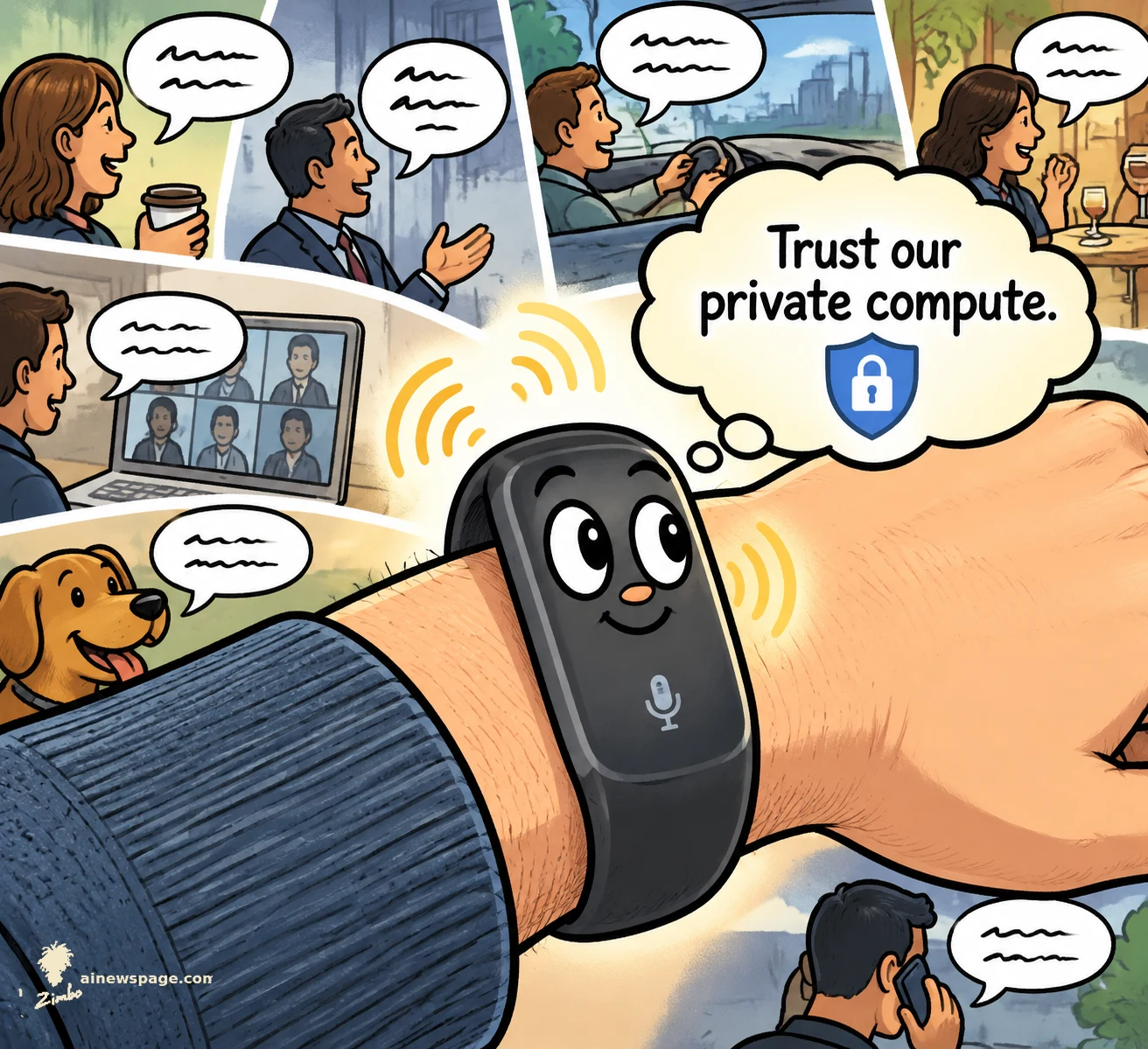
$75 FOR A BRACELET THAT HEARS YOUR WHOLE DAY
Amazon's Bee Frontier wearable listens to you all day, and the sales pitch is 'trust the private compute.' The Bee Eclipse phone clip goes further: it captures both sides of your phone calls — and Amazon says getting consent from the other side is your problem, not theirs. The hardware is cheap. The consent is the customer's homework.
03
THE APP THAT WARNS THE ROOM — OFF BY DEFAULT
Ambi raised $26 million for an AI that listens to everything around you, all day — with the 'warn the room you're recording' feature turned off by default. Its own CEO puts the disclosure burden on the user: you're supposed to tell everyone around you that ambient capture is running. The notice faces the wearer. The room never saw it.
04
13 MILLION SNIPPETS, SEARCHABLE
The Eiliko robot toy stored 31,000 children's chats on Chinese servers with zero encryption. Then a researcher found 13 million-plus conversation snippets, emails, and unencrypted photos sitting on searchable servers — the toy's always-on ears attached to nobody's security standards. Always-on capture plus sloppy storage is a breach with a product launch attached.
05
THE CUDDLY CHARM THAT SEES EVERYTHING
Meta debuted a Tamagotchi-style charm housing its Muse AI agent — a pocket device with a cute cartoon face on serious sensing hardware. The cuteness is doing load-bearing work: a friendly face lowers the exact question the other stories raise, which is what the thing is recording and where the recording goes. Cuteness is the consent strategy.