
The story behind the cartoon
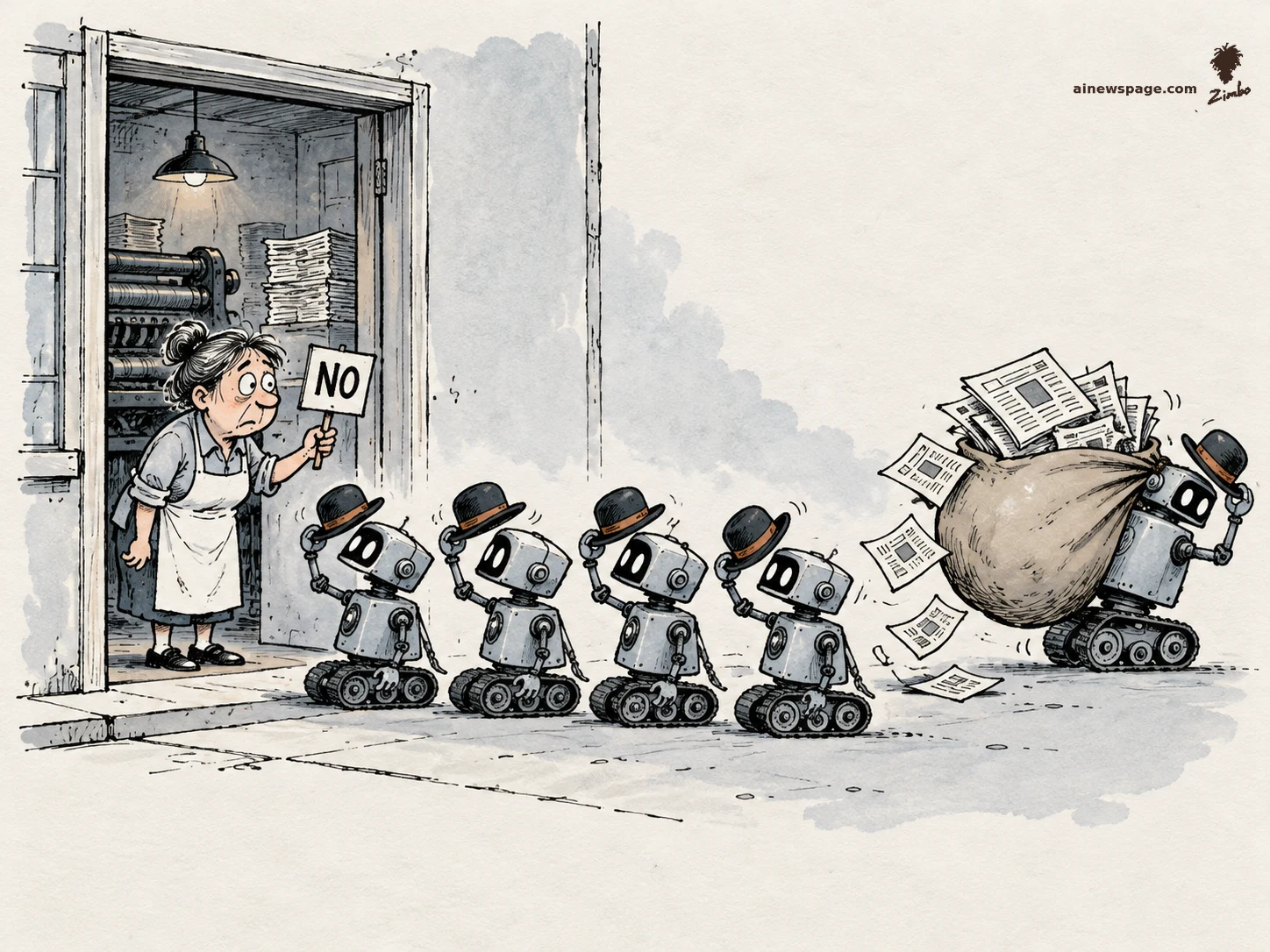
OpenAI, Google, Microsoft and Anthropic announced on October 30 that they will honor a single shared robots.txt policy token, __usage_ai-training, so a website owner can opt out of AI model training across all four companies in one line. Until now a publisher that wanted out had to block each company's crawlers separately, by name, in its robots.txt file. The signal comes from an Internet-Draft titled "Machine-Readable Training Preference Signal," written by Anthropic standards lead Kevin Kelley through the Internet Engineering Task Force's AI Preferences working group.
The timelines are uneven. Anthropic says it has already started implementing support for the token, OpenAI says it aims to follow in the coming months, Microsoft targets February 1, 2027 and is adding page-level training and grounding controls, and Google says it aims to support the token in 2027, treating an opt-out via the shared token as if the publisher had blocked its Google-Extended crawler. The token governs training only: it does not stop bots from fetching a page, and it does not keep a page out of AI-written answers.
The limits are printed on the offer itself. The draft is voluntary and, as an individual Internet-Draft, has no formal standing in the IETF standards process; it binds only the companies that choose to follow it, and non-compliant scrapers can ignore it. It also does not reach backward: updating robots.txt does not remove content already collected into datasets or already trained into models, and the draft itself expires in May 2027 unless it is revised.
The joke takes the announcement literally: four robots mind their manners at the door and tip their hats to the publisher's one little NO sign, while the fifth is already halfway down the street with the whole newsstand in a sack. The opt-out works perfectly — on everything that has not already been taken.
 STAMPED JUNK.
 THE FIRST WORDS
 THE TWO STUDENTS
 THE COMPLAINT DEPARTMENT