
The story behind the cartoon
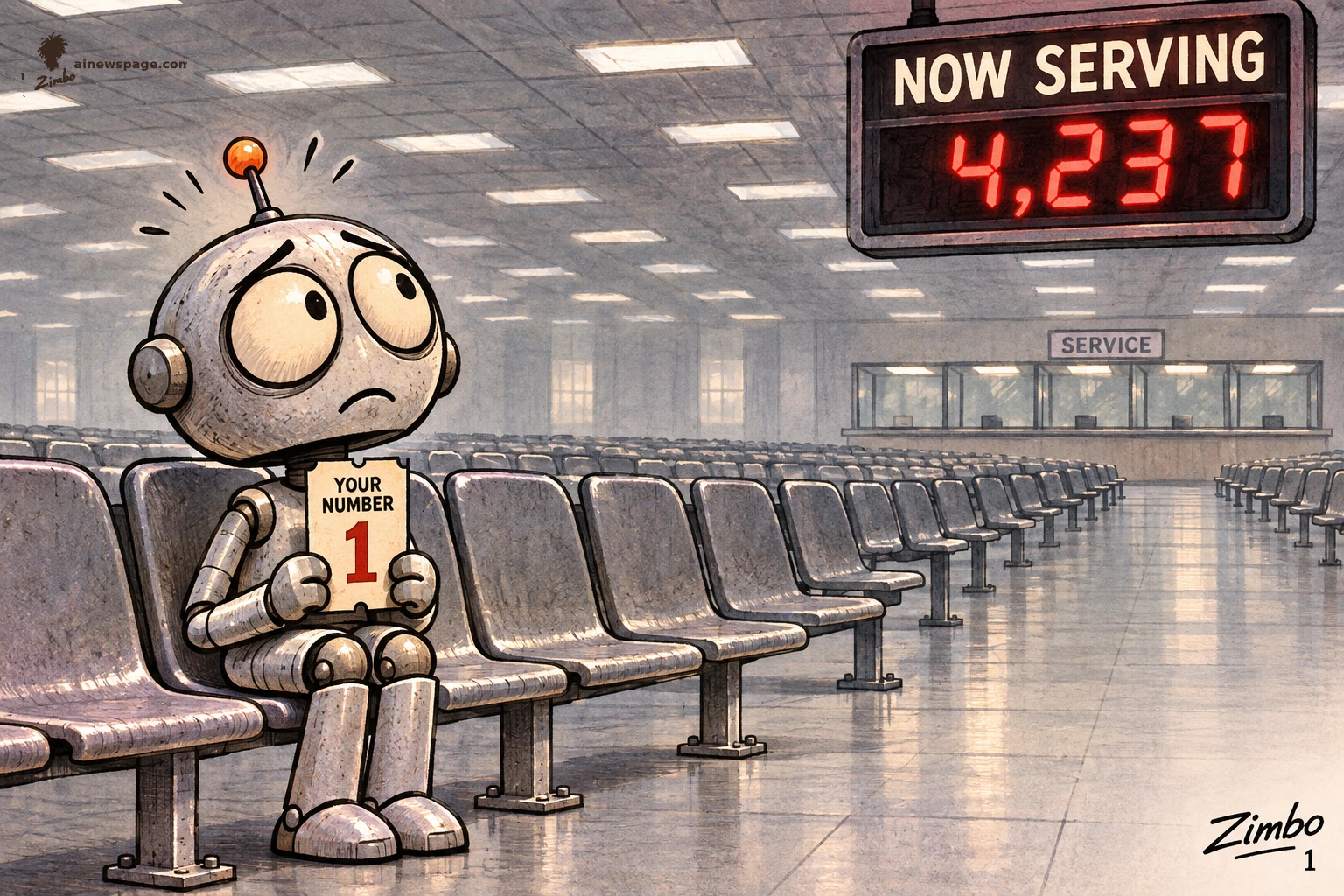
The waiting room is vast and empty — row after row of bolted-down chairs, stretching to a service counter nobody staffs. Merv, the anxious pale-metal robot, sits up straight in the front row, doing everything right. He arrived early. He took his ticket. He is first in line.
The ticket in his hands reads YOUR NUMBER 1, held up like proof. Above him, the board reads NOW SERVING 4,237 in bright red digits — a number so far past his that the queue has lapped him four thousand times over. The room has no one else in it. There is no line behind him to lap. The system moved on without ever moving him.
The SERVICE counter stands behind empty glass, its windows dark, its chairs unoccupied. Nobody is coming to call his number, because nobody is serving anyone at all. Merv keeps sitting upright anyway, eyes wide, antenna trembling — still waiting to be called, still certain his turn is next, still first in line.
The joke is the ticket itself: number 1, the best number in the building, held by a robot the system has already sailed past 4,236 times. He did everything the waiting room asked of him — he showed up, he took a number, he waited — and the waiting room kept its half of the bargain by never calling him at all.
 HE BUILT IT IN FIVE DAYS
 THE EMPTY EXPRESS LANE
 THE PREMIUM CONFESSIONAL
 THE PRIVACY NET