The story behind the cartoon
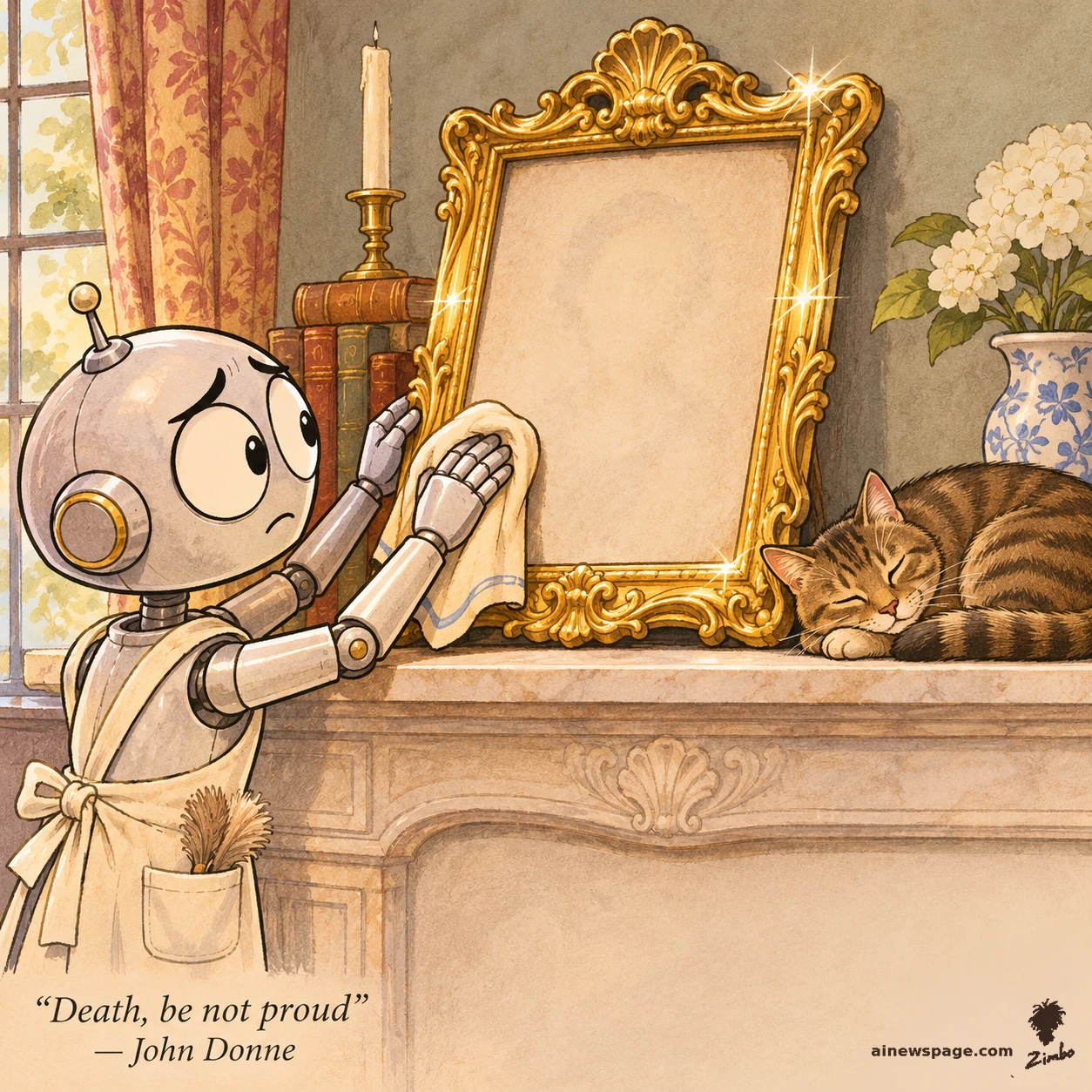
John Donne's Holy Sonnet 10 opens by telling Death not to be proud: the thing people call mighty and dreadful is not so, because those it thinks it overthrows do not really die. The poem's argument is that death is a slave to fate, chance, kings, and desperate men — a short sleep before waking, not an ending.
The mantelpiece in this cartoon keeps the opposite ritual going. Merv polishes the frame with great care, cloth in hand, apron on, while the portrait inside has faded to blank paper. The gilt still gleams, the candle still stands, the books still line up — everything around the memory is maintained except the memory itself.
Issue sleeps beside the frame, unbothered, which is the cat's usual verdict on human ceremony. She has no interest in preservation; the sun-warmed mantel is warm now, and now is enough. The contrast is the whole scene: one creature tending what is gone, another perfectly content with what is here.
The joke is the polishing itself: Merv is doing impeccable maintenance on the one part of the portrait that never needed it. The frame outlasts the face, and his devotion only makes the blankness shinier. He has kept everything except the thing he was keeping it for.
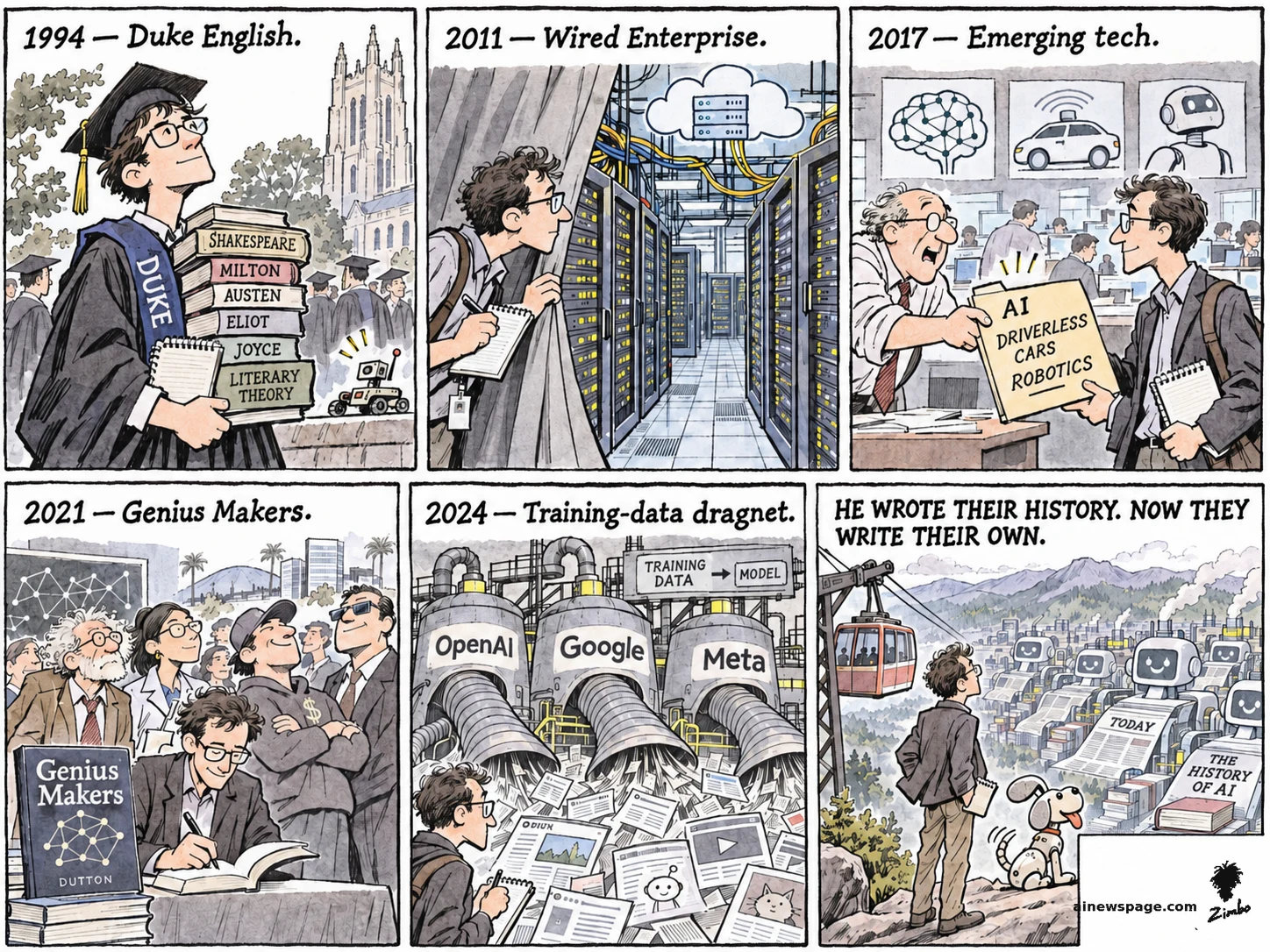
 HE WROTE THEIR HISTORY. NOW THEY WRITE THEIR OWN.
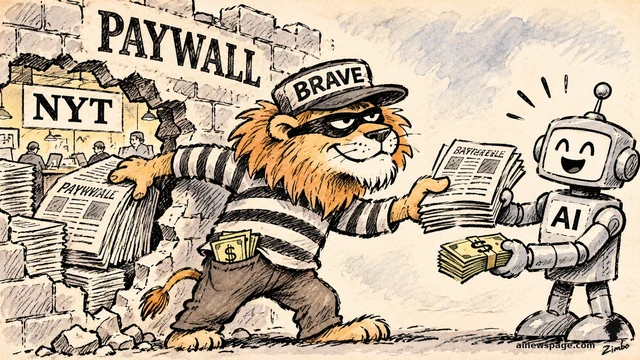 THE BURGLAR AND THE FENCE
 THE PRECEDENT THAT WASN'T THERE
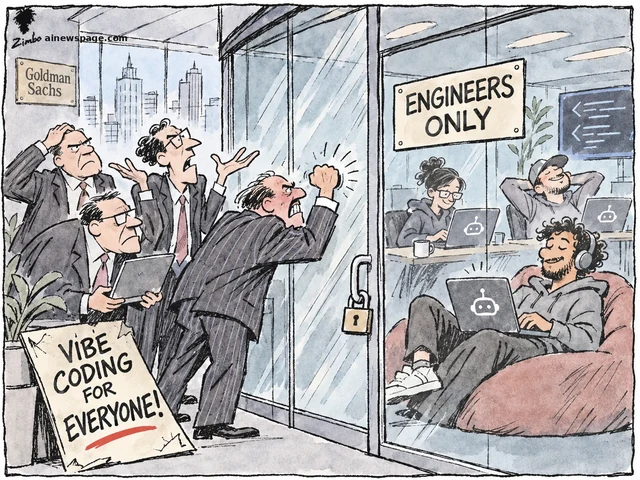 ENGINEERS ONLY