

The story behind the cartoon
The hourglass has been a memento mori for centuries: a small, plain instrument that shows time running out in front of your eyes, sand slipping from the bulb that had it into the bulb that keeps it. Unlike a clock, it does not pretend time comes back around; when the top bulb is empty, the glass has said what it came to say.
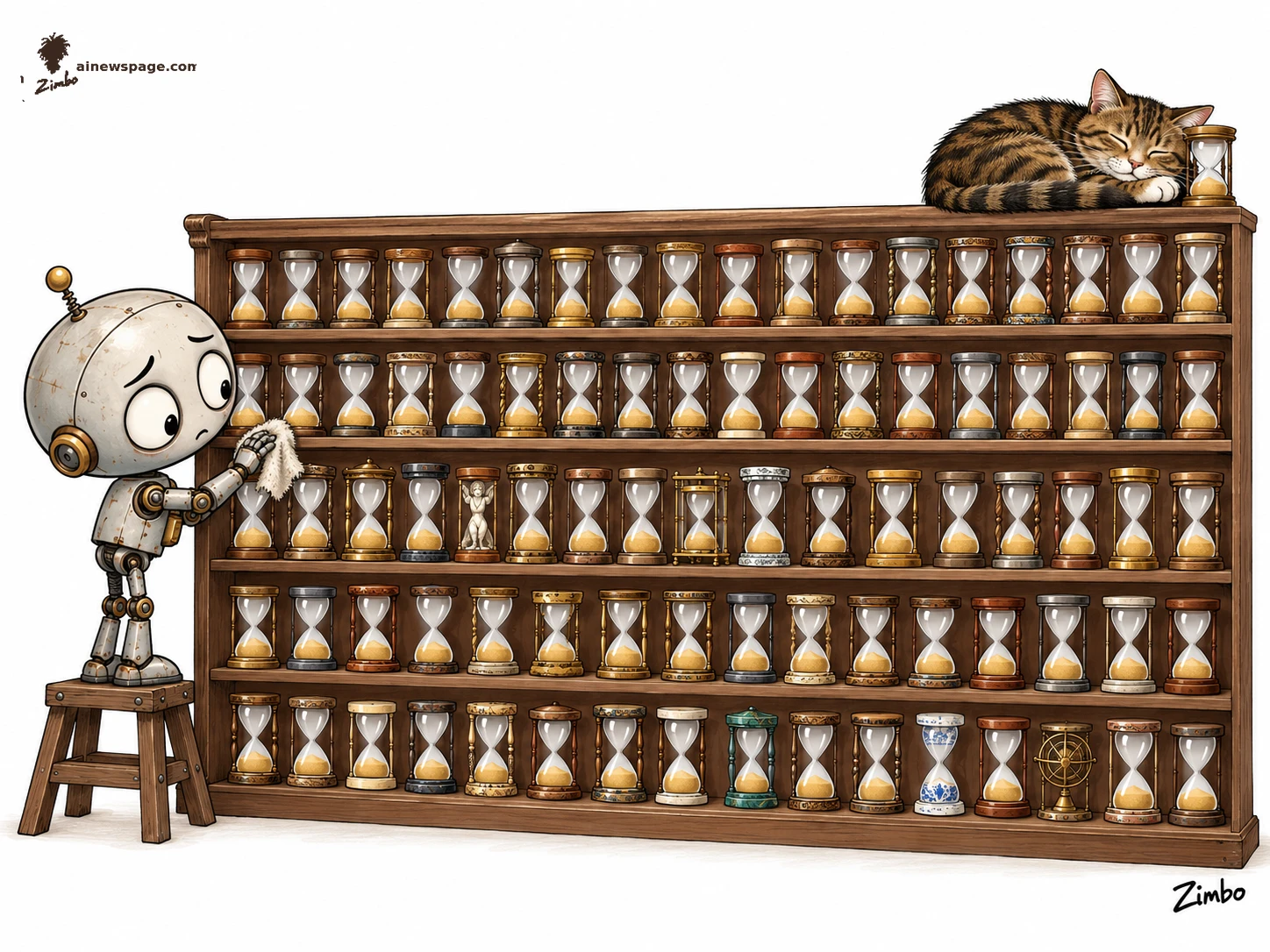
A collection changes the meaning. One spent hourglass is a reminder; a hundred of them, shelved and dusted like treasures, is a record of every interval already used up — each one finished, none of them refillable, all of them kept anyway. The collector is not measuring time anymore. He is curating the evidence that it passed.
That is the memento mori in its gentlest form — not a warning shouted at the living but a quiet inventory, kept in good order. The cat asleep on top of the shelf has the other half of the philosophy: time is not something to be managed, only something to nap through while it runs.
The joke is the housekeeping: Merv tends his hundred dead hourglasses with the devotion of a man polishing trophies, dusting each one as if careful maintenance could put the sand back. It cannot, and he knows it — which is exactly why he keeps dusting.
 ZIMBO ROASTS: JENSEN HUANG
 THE UPDATE THAT LET STRANGERS IN
 THE TABLET LOST. HE STAYED.
 THE CONFESSIONAL IS FOR SALE