THE SHORT VERSION
A DISH OF HUMAN BRAIN CELLS SORTED BRAILLE LETTERS
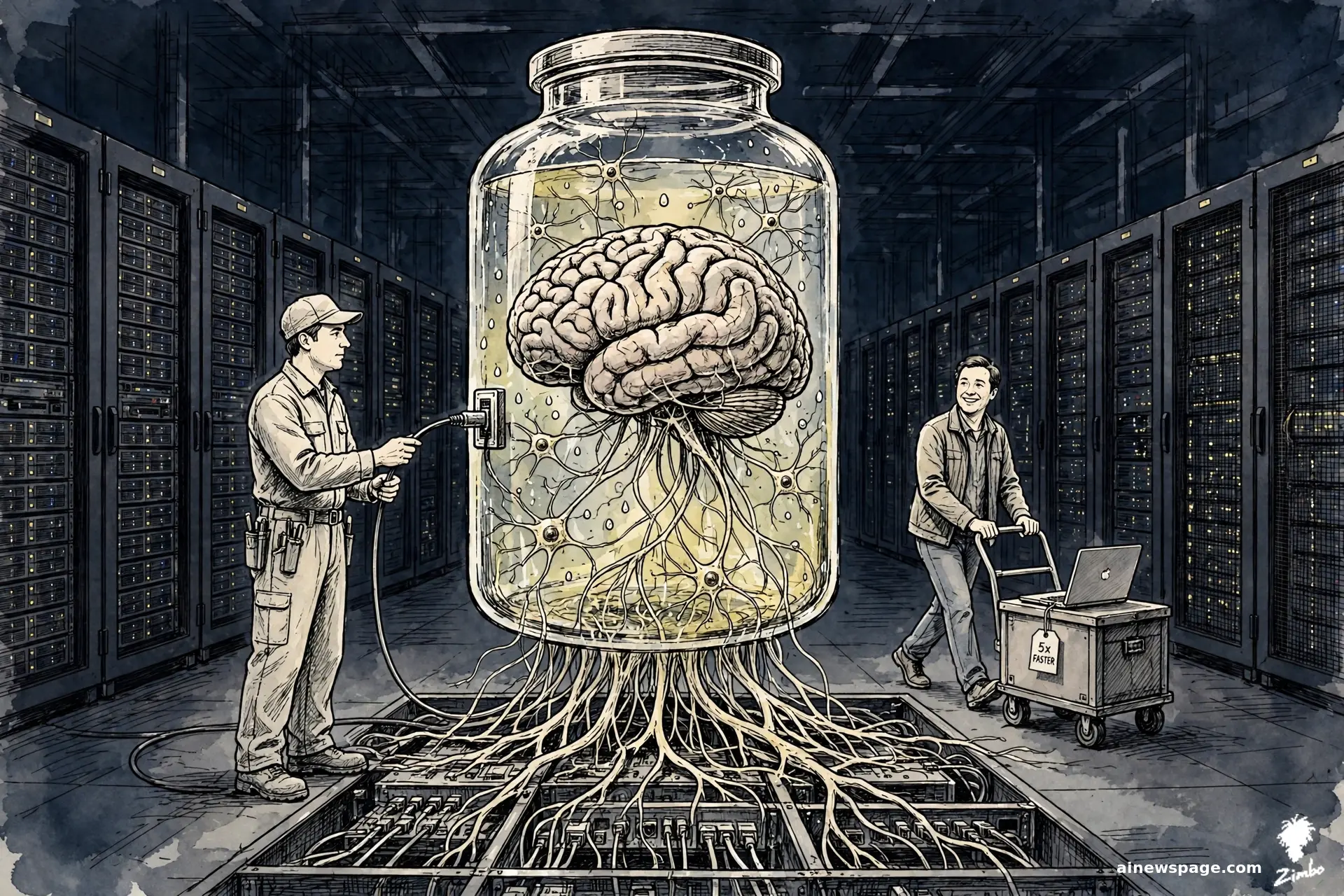
Researchers led by Tianyi Liu at the University of Bristol fed electrical signals corresponding to Braille letters to human brain organoids, living neural tissue derived from stem cells and kept alive on electrode arrays at less than a millimetre across. A tactile sensor scanned the 26 Braille letters, the data was converted into electrical stimulation patterns, and a decoder then read the organoids' responses to work out which letter had been presented.
A single organoid of about 10,000 neurons classified the letters with about 61 percent accuracy, while an ensemble of three organoids reached 83 percent. The study, published in Frontiers in Artificial Intelligence, was an open-loop experiment with no feedback to the tissue, so it does not show the organoids learned Braille, only that biological neural networks can take part in processing information from robotic tactile sensors.