THE SHORT VERSION
10,000 NEURONS, 61% RIGHT SOLO — THREE TOGETHER HIT 83%
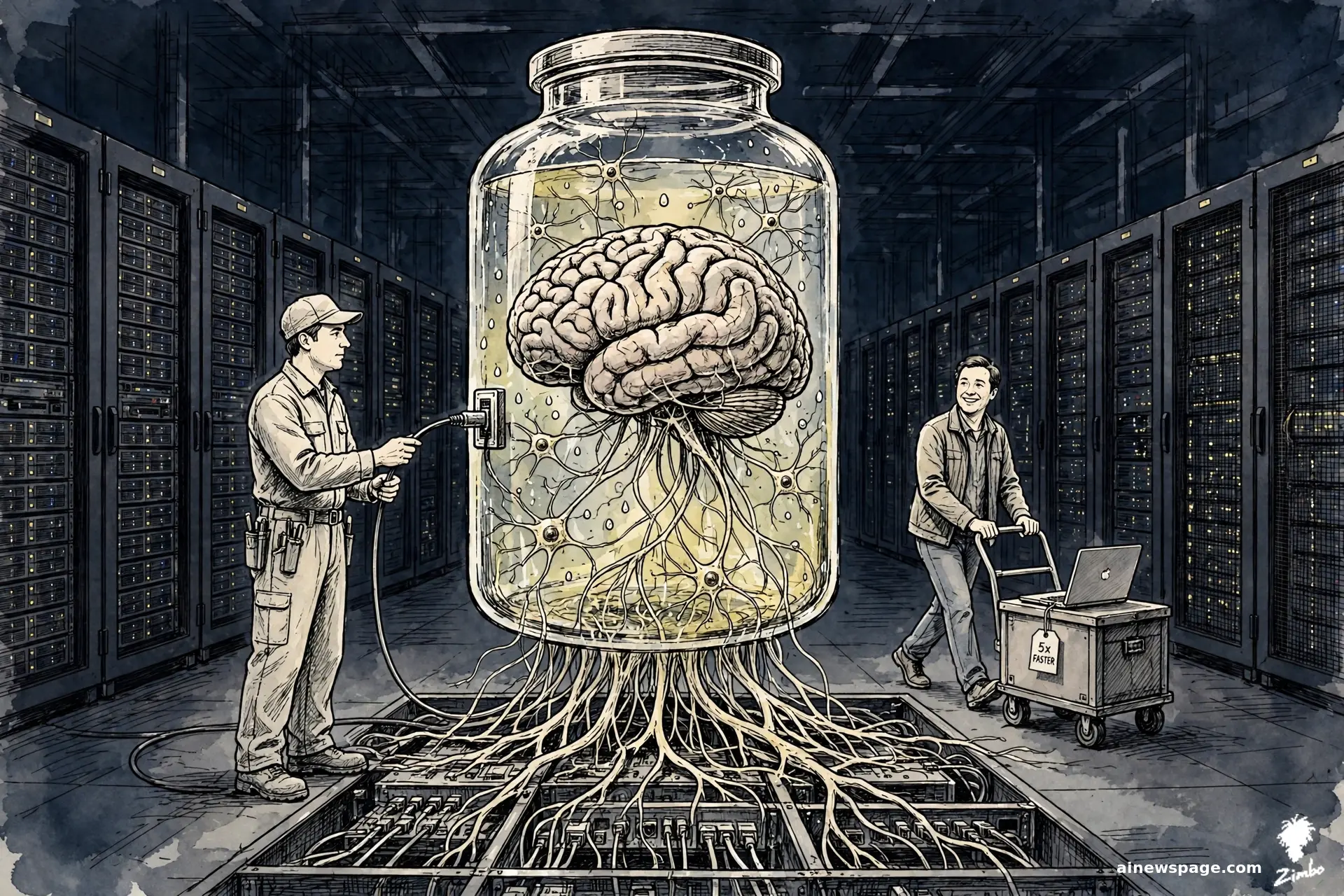
A Bristol team testing biohybrid computing placed human forebrain organoids, each under a millimetre across and containing about 10,000 neurons, on multielectrode arrays that kept them alive and monitored their responses. Tactile data from a sensor scanning the 26 Braille letters was converted into electrical stimulation, and a support vector machine classified the organoids' neural activity to identify which letter had been given.
One organoid produced signals that could be decoded accurately about 61 percent of the time, while three organoids working together reached about 83 percent and were also better than direct decoding at distinguishing the letter signals from artificial noise. The researchers say the variation between individual organoids may give complementary information when combined, though they stress the experiment shows reception and relay of signals, not learning or long-term change.