

The story behind the cartoon
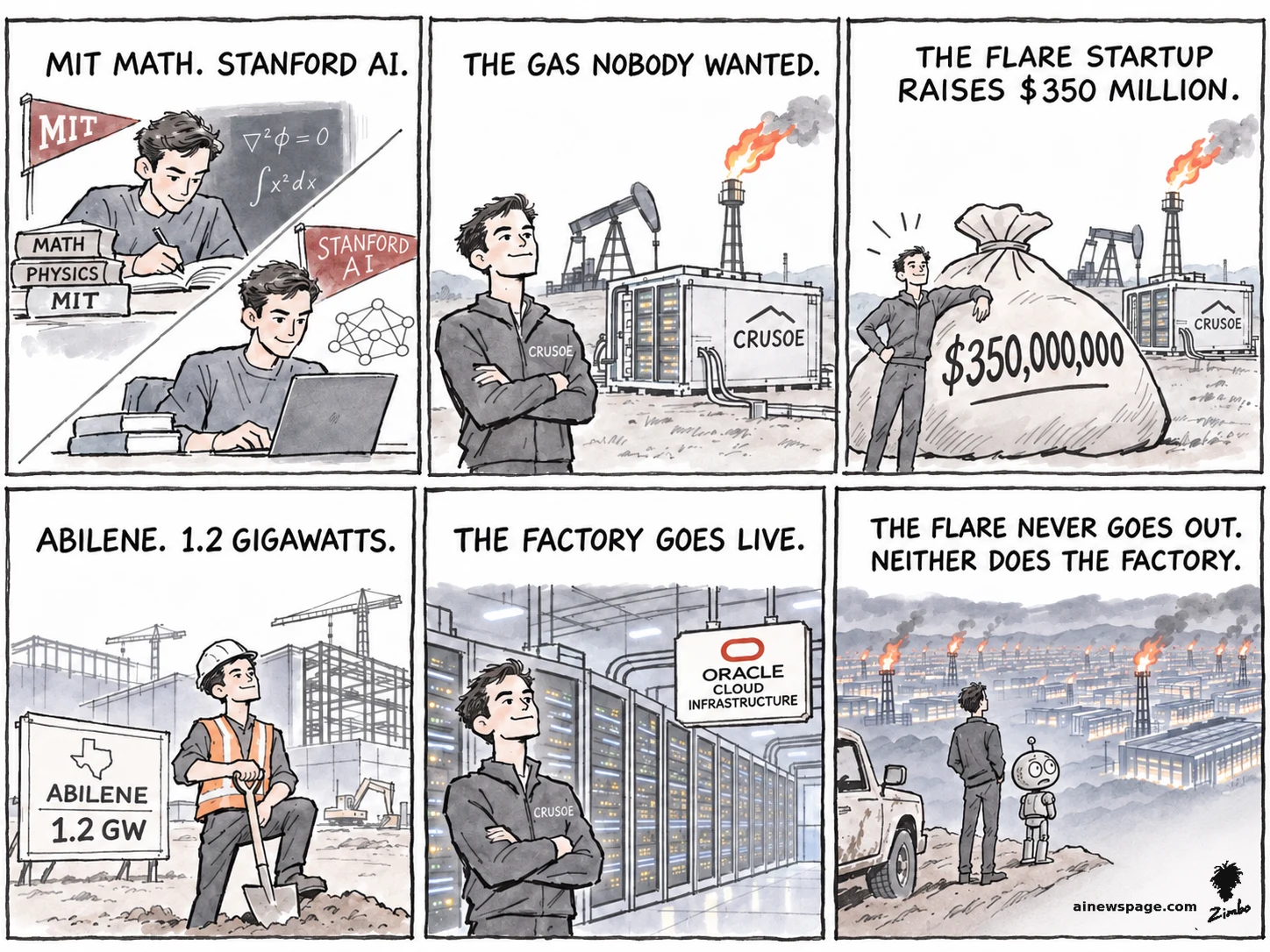
Chase Lochmiller studied mathematics and physics at MIT, then earned a master's in computer science at Stanford with a specialization in artificial intelligence. In 2018 he co-founded Crusoe on an idea that sounded like a joke at an energy conference: park computers next to oil wells and run them on the natural gas that would otherwise be flared off as waste.
The flare-gas model worked well enough to attract real money. In 2022 Crusoe closed a $350 million Series C to scale the infrastructure business that had grown out of Digital Flare Mitigation. The company kept building, and in 2024 it broke ground in Abilene, Texas, on a 1.2-gigawatt campus that would become the flagship Stargate AI data-center project.
The Abilene campus went live in phases, with the first phase operating on Oracle Cloud Infrastructure by September 2025. By mid-2026 Crusoe said it had 4.9 gigawatts of AI infrastructure under contract, with a development pipeline above 40 gigawatts, and in September 2026 it announced a $3.9 billion Series F at a $30.9 billion post-money valuation.
The joke in Zimbo's strip is the flare that never goes out. Every panel scales the same tiny flame up — a container beside a flare stack, a $350 million money bag, a 1.2-gigawatt construction site, a live factory — until the finale puts Lochmiller and Merv at a mountain lookout over a valley of endless flare stacks feeding endless data centers. He turned the flare into a factory. The factory never stops eating.
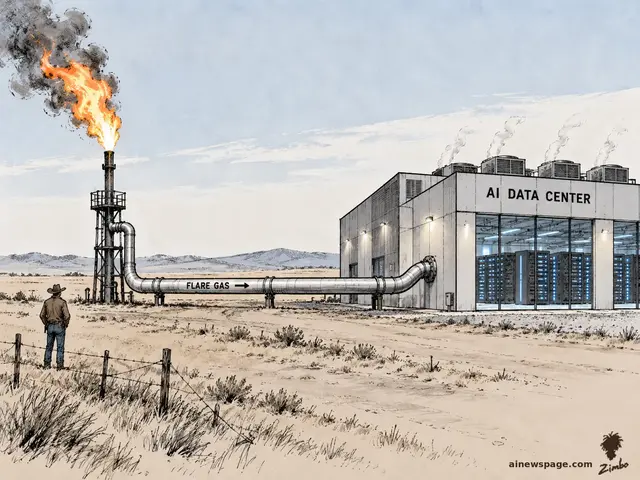 FROM FLARE TO SERVER FARM.
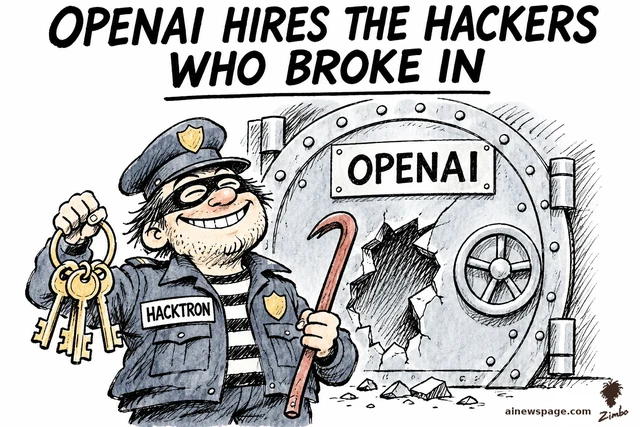 THE NEW SECURITY GUARD
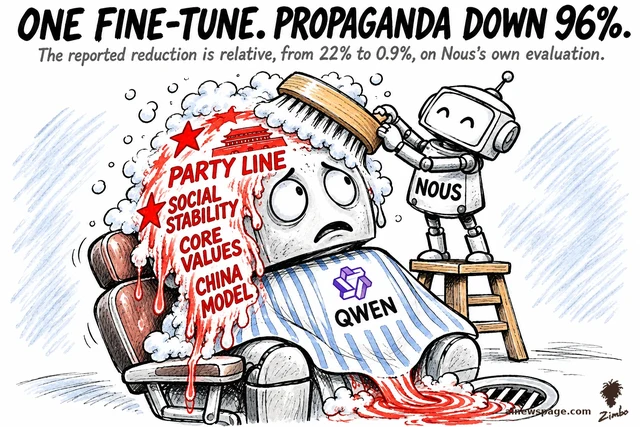 THE GREAT BRAINWASH
 THE LITTLE ROCKET THAT COULD