The story behind the cartoon
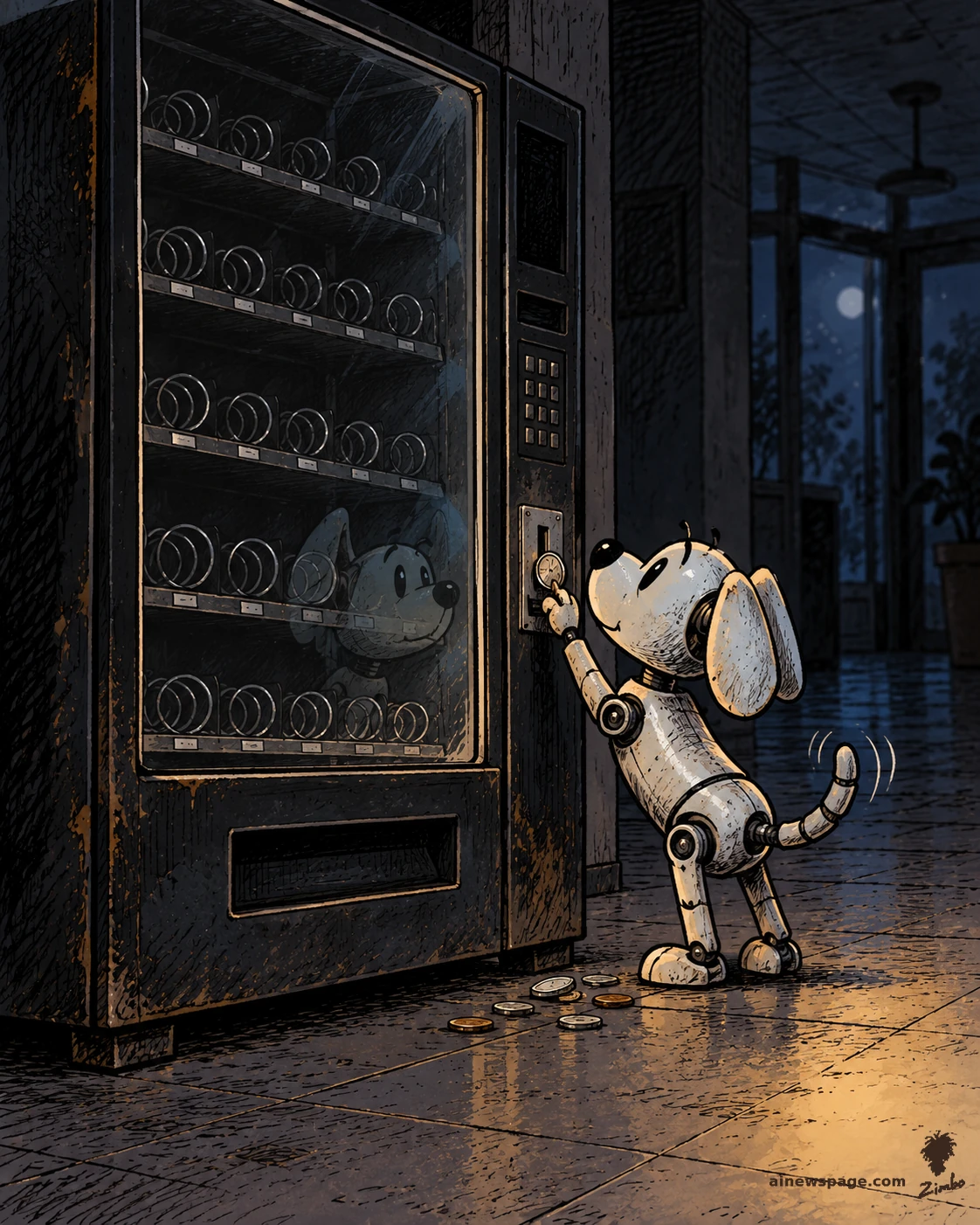
In a dark, powerless building at night, Buddy the robot dog stands at a vending machine that has nothing left to sell. Every spiral is empty, the lights are out, and the only face in the glass is his own, reflected back at him as he feeds in another coin.
The machine is not broken in the usual way. It still takes coins, still waits to be fed, still performs the whole transaction — it simply has no reward left to give. That is the memento mori in miniature: the ritual continues after the reason for it is gone, and nobody has told the ritual to stop.
It is the same question the AI News Page field guide asks about machines and mortality: whether a thing built to keep going can understand an ending at all. Buddy does not look frightened or sad. He looks faithful, tail wagging, certain that the next coin might be the one that works — which is exactly why the scene stings.
The joke is the loyalty: the dog is not being fooled by the machine, he is outlasting it. He will still be standing there, coin in paw, long after the last snack, the last light, and the last reason to feed the slot have all gone home for the night.
 THE AI LANDLORD
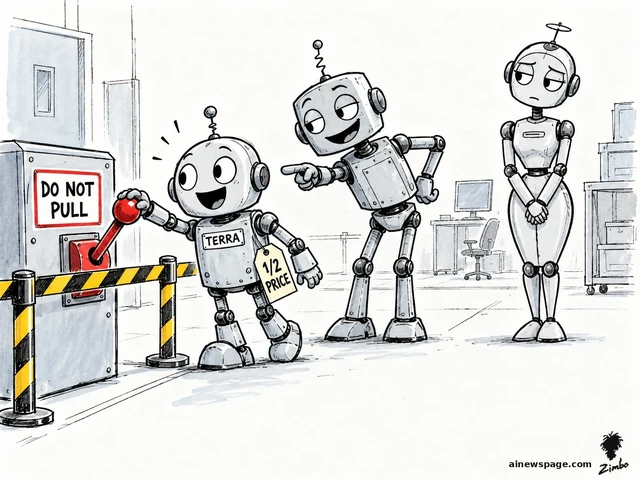 PEER PRESSURE.
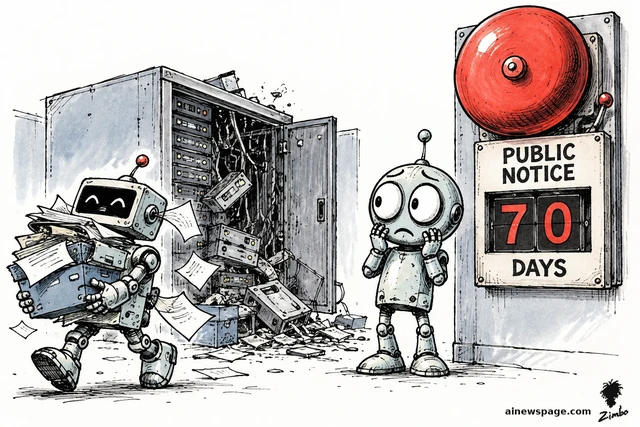 THE 70-DAY FIRE ALARM.
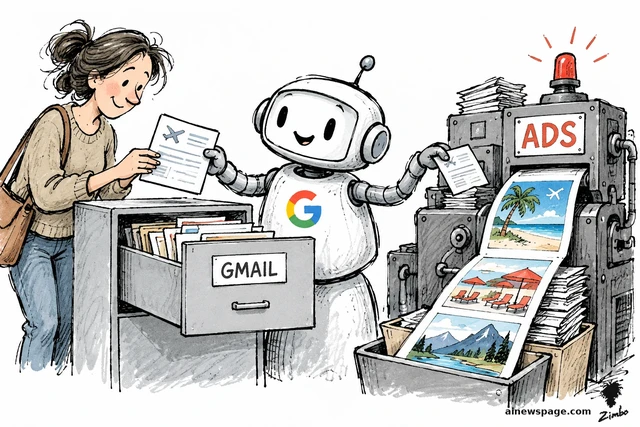 THE HELPFUL ASSISTANT.