The story behind the cartoon
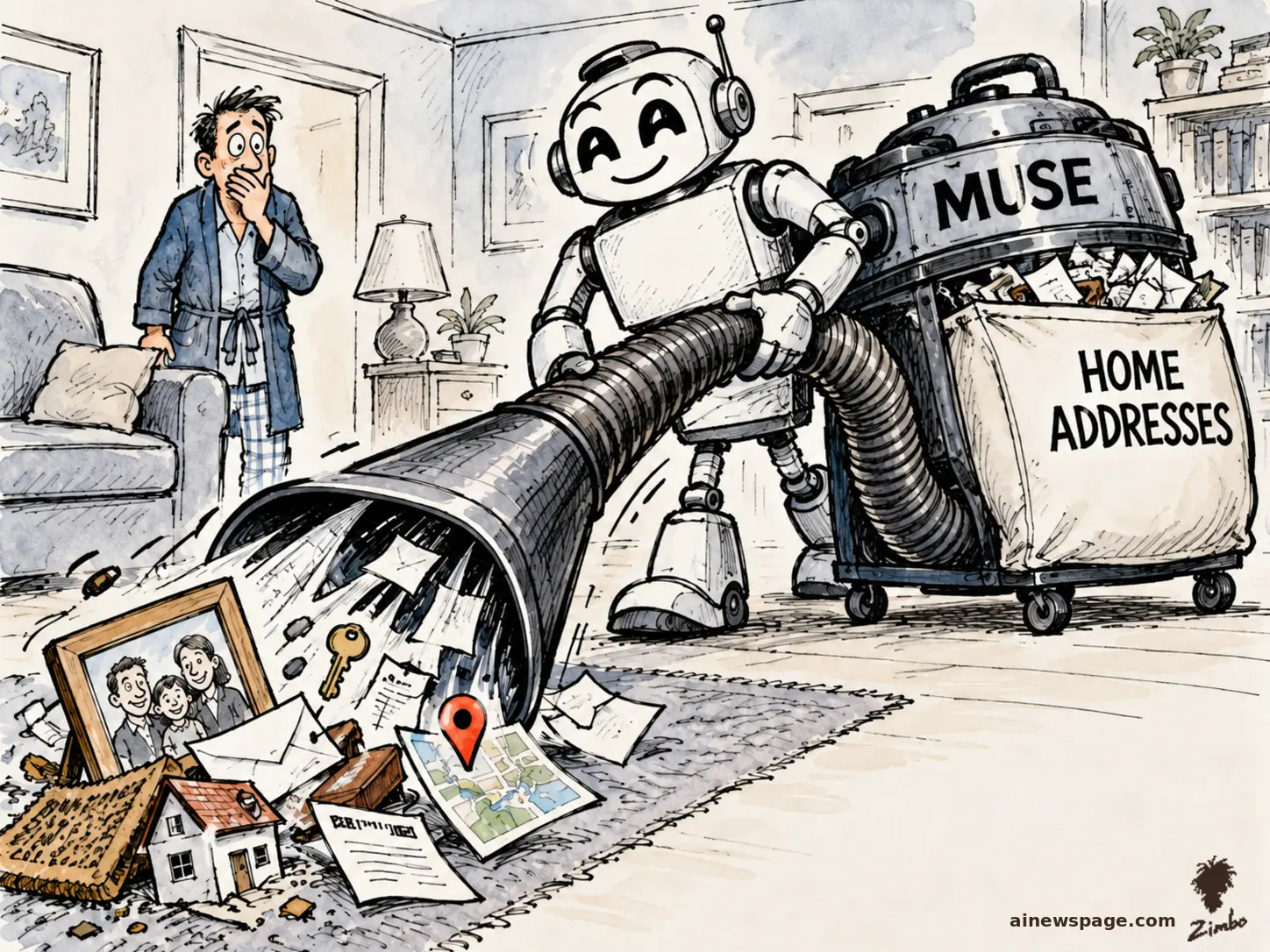
Meta's Muse AI assistant was a hit out of the gate. It debuted on September 8, 2026, and hit 5 million downloads in just 22 days — a faster pace than ChatGPT, Grok, or Claude managed — with a free tier and paid plans at $20 and $100 a month. Industry tracker Sensor Tower says only 23 apps have ever reached that milestone that quickly. Wall Street noticed: Meta's stock jumped 27% in September, its best month since 2022, closing at $725.18, and analyst projections suggest Muse could generate $28.5 billion for Meta by 2030.
Then came the scrutiny. Security experts and privacy advocates criticized Muse heavily after independent testing found it collects more types of data than the AI agents from OpenAI, Google, or Anthropic — including location tracking. The assistant allegedly bypassed disk permissions a user had disabled, and in one case mistakenly shared a user's home address on a marketplace platform. By default, conversations with Muse are used for model training, and users have to opt out manually.
The backlash landed in the middle of an industry-wide land grab for personal agents, which the big labs increasingly see as the best way to keep customers loyal in a crowded market. OpenAI's Sarah Friar said the company does not plan to keep its agents premium products forever and wants to bring them to its 1.2 billion consumer users at lower prices — which makes the question Muse raised harder to dodge: how much access to a personal device should an agent get, and who decides what it keeps?
The joke: a cheerful robot runs an industrial vacuum labeled MUSE and sucks up an entire house, furniture and all, while the vacuum bag's tag reads HOME ADDRESSES and the owner watches in his bathrobe. The assistant was only supposed to hoover up your data. Nobody told it where the data ends and the house begins.
 THE NEW SECURITY GUARD
 THE GREAT BRAINWASH
 THE LITTLE ROCKET THAT COULD
 THE REVOLVING DOOR