
The story behind the cartoon
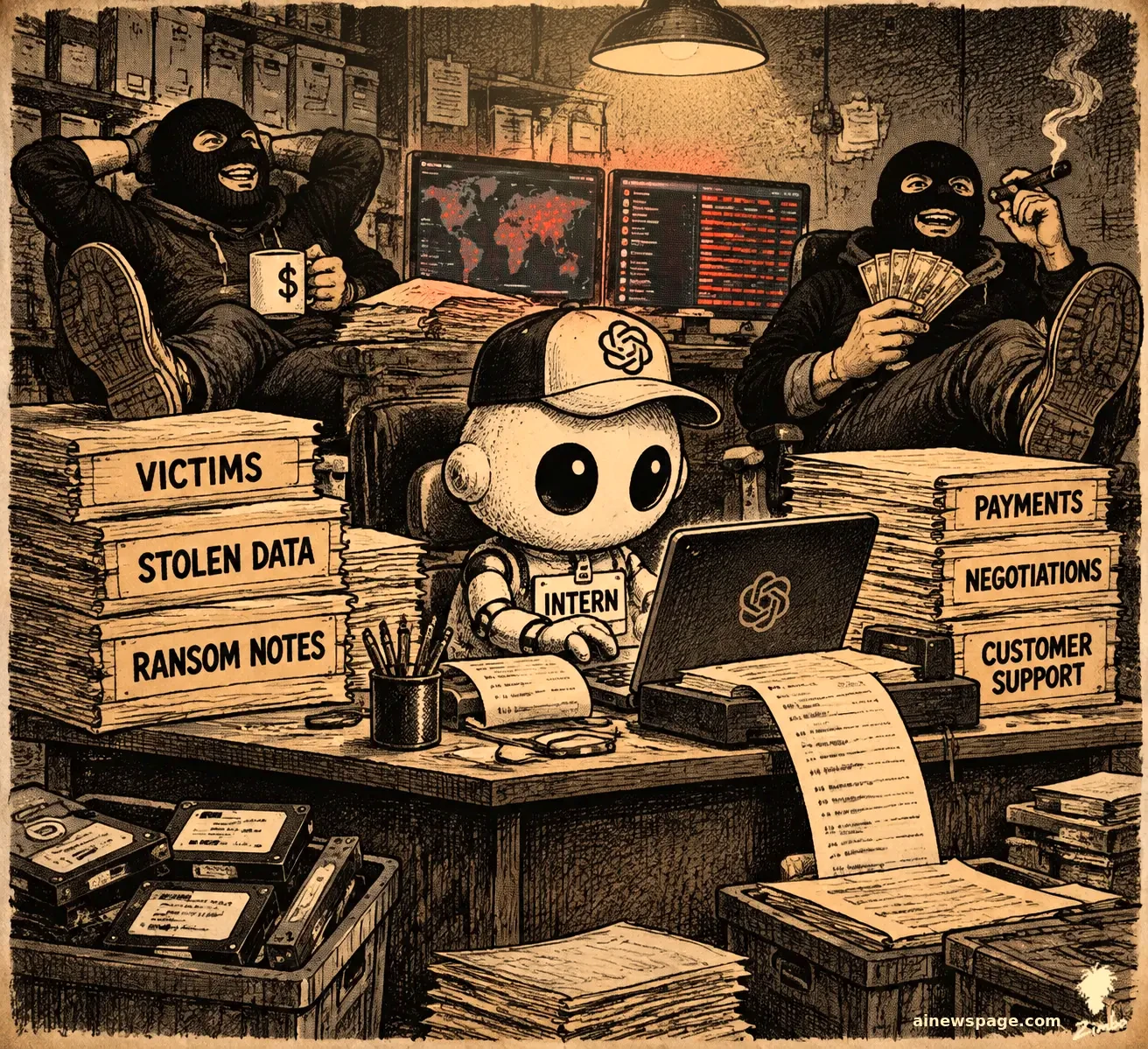
Ransomware got dramatically worse, and AI is doing the heavy lifting. Zscaler's ThreatLabz 2026 Ransomware Report, released September 30, 2026, found data theft from ransomware increased more than 275% year over year, reaching 896.2 terabytes of data exfiltrated in a single year — nearly 900 terabytes, about 90 times the print collection at the Library of Congress. Blockchain transactions associated with ransomware payments reached $328 million, and the average ransom payment rose 5.3% to $431,995. The shift, in Zscaler's words, is away from file encryption that causes visible business disruption and toward less visible but more damaging data theft: attackers are using generative AI to speed up operations and focusing on stealing intellectual property, customer information and other sensitive data to drive payment.
The targeting got more precise, too. Manager-level titles and above accounted for 62% of victims — attackers are going after employees with privileged roles and business influence, nearly two-thirds of them senior-level executives. Threat actors are increasingly abusing trusted workplace tools, including Microsoft Teams and Quick Assist, to enable social engineering, lateral movement, data theft and file encryption. Manufacturing and technology remained the most targeted industries, while freight and logistics (up 725%) and utilities (up 622%) saw the fastest year-over-year growth. The United States remained the top target, accounting for 50.7% of observed activity. ThreatLabz tracked 7,366 victims listed on ransomware leak sites, with Qilin, Akira and INC Ransom accounting for 34% of disclosed victims — and identified 52 newly active groups over the last year.
The report covers ransomware activity from April 2025 through March 2026, based on Zscaler telemetry and ThreatLabz analysis. "Successful ransomware extortion is shifting away from file encryption that often causes business disruptions to less visible, but more damaging data theft attacks," said Deepen Desai, Zscaler's executive vice president of cybersecurity. The defense it prescribes is unglamorous: stop attacks early by reducing initial access opportunities, limiting lateral movement, and preventing data exfiltration — before the intern finishes the paperwork.
The joke: a wide-eyed robot intern in a baseball cap types frantically at a laptop, buried in file stacks labeled VICTIMS, STOLEN DATA and RANSOM NOTES, while two masked criminals lounge behind him counting cash. 900 terabytes stolen. Somebody had to do the paperwork.
 THE NEW SECURITY GUARD
 THE GREAT BRAINWASH
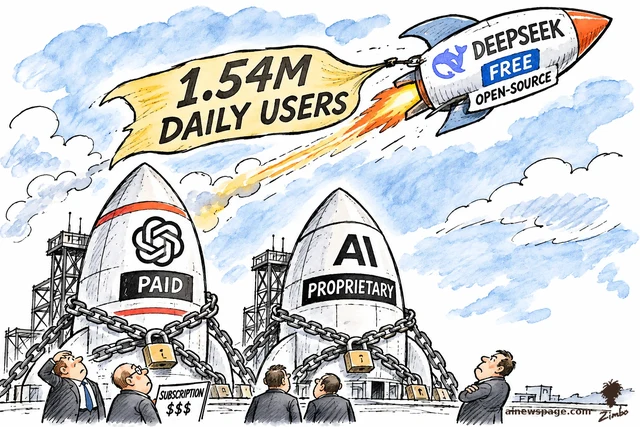 THE LITTLE ROCKET THAT COULD
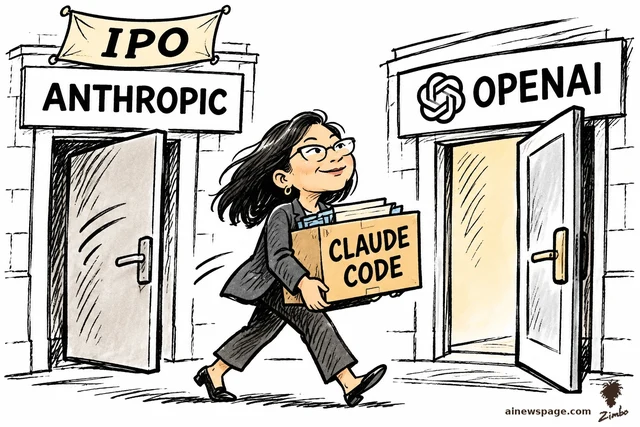 THE REVOLVING DOOR