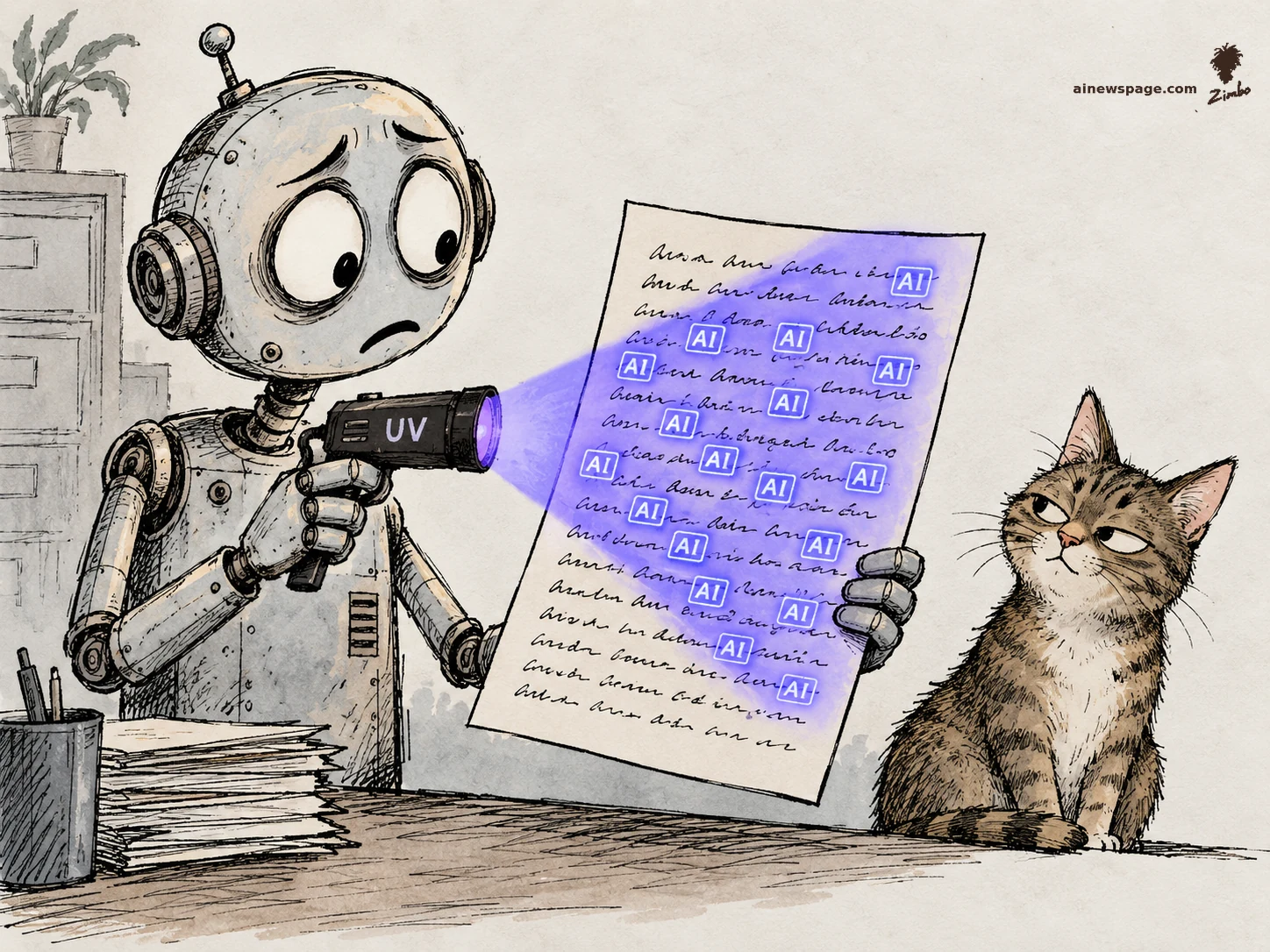
01
IT STARTS IN EUROPE — WHETHER YOU ASKED OR NOT.
OpenAI will roll out textGrain over the coming weeks to eligible ChatGPT and Codex users on all plans — but only in the EU — to comply with the AI Act's transparency rules. API developers anywhere can switch it on for select models starting October 5, 2026; it's off by default, and OpenAI said it is not making watermarking a global default at launch. The default follows the law, not the user.
02
A THESAURUS BREAKS IT.
OpenAI's own tests say editing defeats the signal. Swapping 10% of words for synonyms cut detection from about 92% to 66%; swapping 25% cut it to 17%. Short passages, math answers, and translated text are harder to detect — math answers scored 'substantially lower' because there are fewer ways to word them. The attack costs nothing. It takes a thesaurus.
03
THE DETECTOR IS LOCKED — AND A MISSING STAMP PROVES NOTHING.
OpenAI is giving detector access only to approved researchers and expert organizations, citing the limits above. The company also cautioned that a missing watermark 'does not prove human authorship' — the text could be too short, too heavily edited, or from another company's AI. You can't see the signature on your own words. Neither can your teacher.
04
OPENAI BUILT THIS IN 2024 — AND SAT ON IT.
OpenAI had a text watermark years before this launch but held off releasing it, partly over concerns users would switch to rivals that didn't watermark, as the Wall Street Journal reported in 2024. The technology didn't change much in two years. The incentive did: now Brussels requires it. When it was a choice, the company chose not to. When it was a rule, it shipped.
05
ANTHROPIC WENT FIRST. ITS USERS REVOLTED.
Anthropic announced watermarking for Claude text two months earlier — worldwide, no opt-out — and drew backlash from users who argued they'd supplied the instructions, context, and decisions while the model was merely the tool. Google DeepMind's SynthID text marking shipped years before that. The US has no equivalent federal rule, so OpenAI's new default stops at the EU border. Two companies, two defaults: Anthropic signs everything everywhere; OpenAI signs only where the law makes it.