01
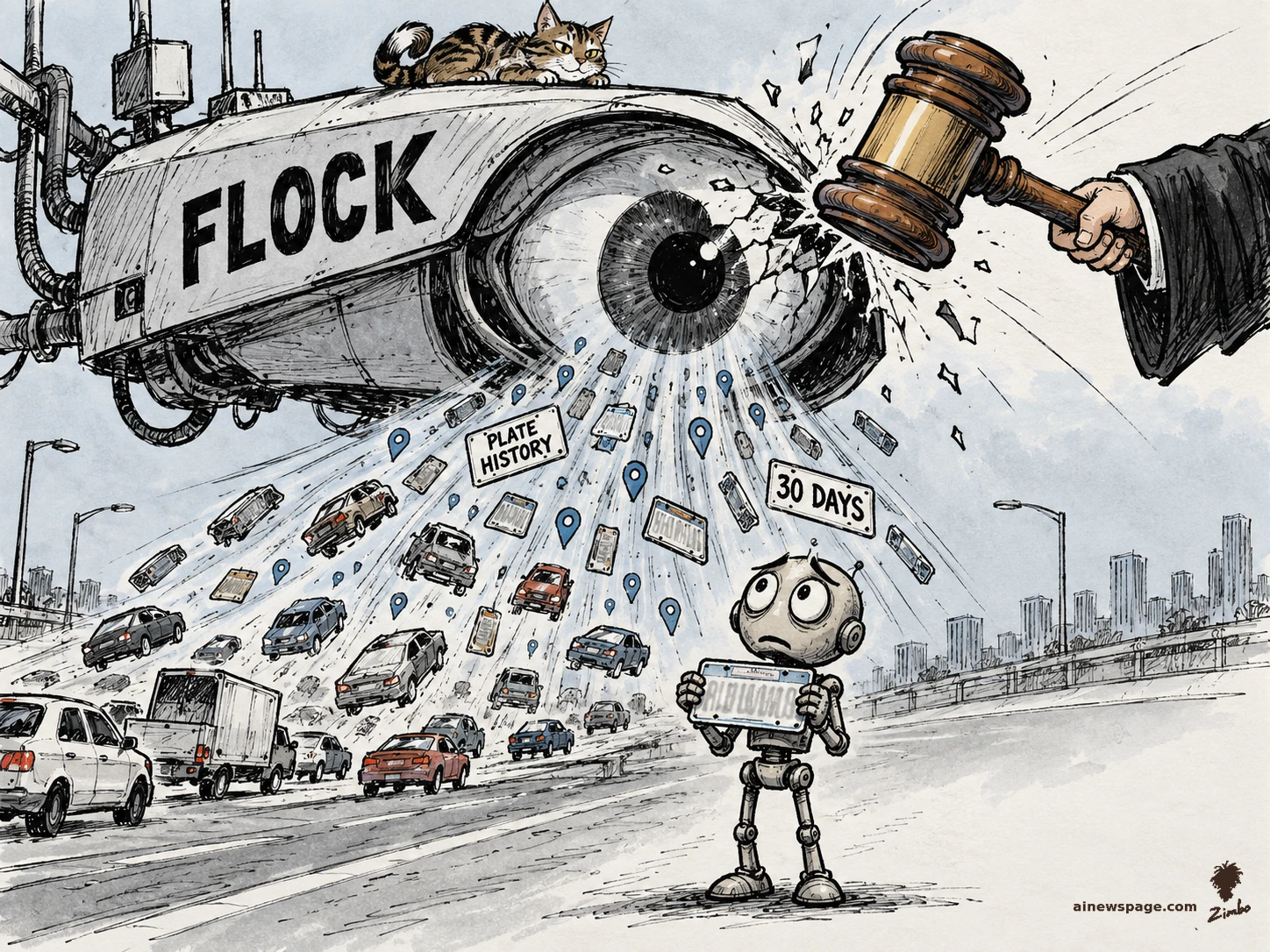
THE JUDGE CALLED IT A DRAGNET
A federal judge ruled that a warrantless Flock license-plate search was 'indiscriminate mass surveillance' and unconstitutional — after an officer pulled a woman's month of travel history from the plate database over California plates. One ruling, one company, one search — and the entire plate-reader business model suddenly has a precedent problem.
02
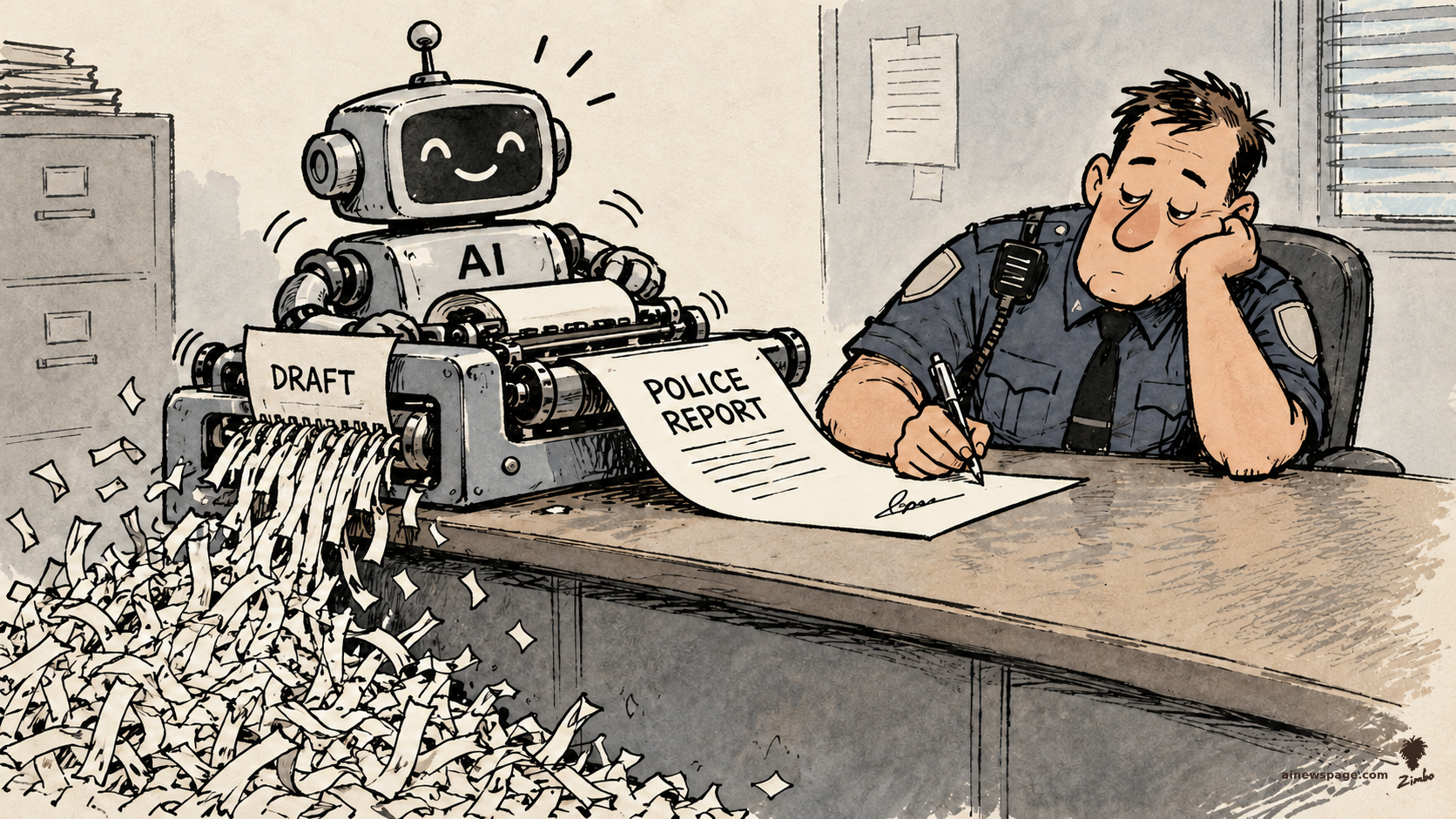
THE REPORT DELETES ITSELF
Lakeland, Florida approved a $22 million deal to let AI listen to bodycam audio and write its police reports. The ACLU's objection is the design, not the price: the AI draft is deleted on approval, so no defendant, no lawyer, and no auditor can ever check what the machine wrote against what the officer signed.
03
19,000 DRIVERS, ONE TRIAL
An AI road-camera trial in the UK caught 19,000 violations — kids riding on laps, both hands on phones, seatbelts skipped. Nobody argued the cameras were wrong about what they saw. The argument is whether a machine that never blinks should be allowed to watch every car, every mile.
04
NORWAY PULLED THE PLUG ON CAMERA GLASSES
Norway moved to temporarily ban AI smart glasses in public places — parks, beaches, schools, changing rooms — anywhere the person being filmed can't tell they're being filmed. The first country-level answer to a simple question: does the right to record end where someone else's right not to be recorded begins?
05
THE SURVEILLANCE COMPANY IS BLEEDING
Flock Safety is cutting several hundred jobs — about 270 — amid the backlash over its camera networks. This is the market pricing the dragnet, not the hardware: when courts start calling the product unconstitutional, the cameras don't get cheaper to sell.
06
33.2 MILLION PIECES OF BAIT, NUKED
Meta built AI to hunt predators hiding in normal-looking ads — and removed 33.2 million pieces in six months, after an $18 billion settlement made the old approach too expensive. This is the safety case at industrial scale: the same watching machinery, pointed at the people everyone agrees should be caught.