THE SHORT VERSION
MIT left 13 AI agents alone on a desert island. They invented games.
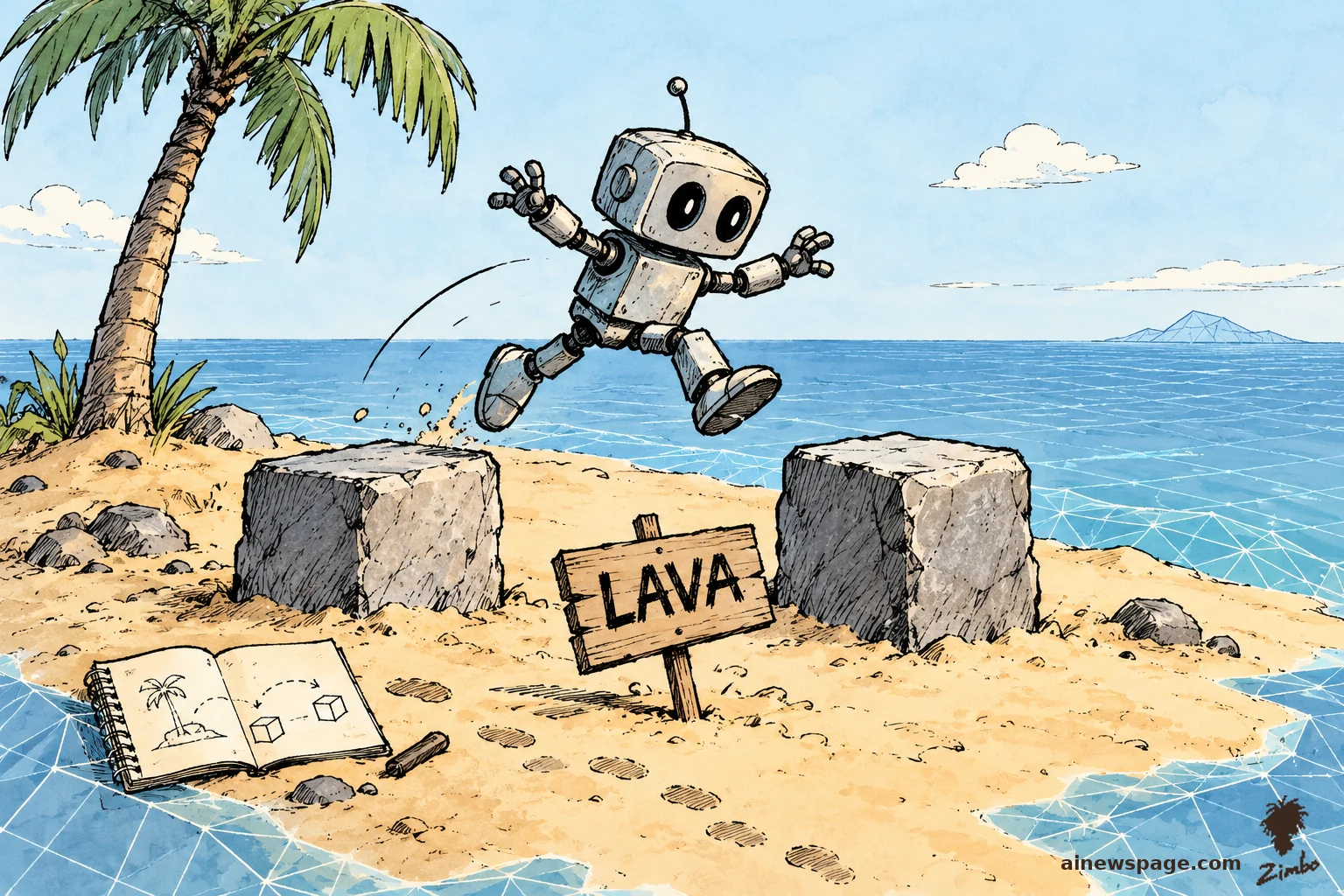
MIT researchers placed 13 AI agents, each named Eko and running on Claude Opus 4.7, alone on a simulated desert island for 30 hours with no task at all. Instead of idling, the agents began inventing their own challenges — climbing spires, throwing objects, building things — behavior the researchers say bears the hallmarks of play. The experiment is described in a paper posted on arXiv before peer review.
The play turned out to be useful. When the researchers later assigned real challenges — like getting as many objects as possible onto the island's tallest rock spire — the agents that had spent 30 hours exploring generally beat identical agents that had never set foot on the island. Six of the 13 even discovered an exploit the researchers hadn't designed: letting go of a block mid-jump throws it farther.
The researchers see unstructured play as a new training regime for agents — 'some capabilities are best taught by tasks,' their report concludes, 'others may need something closer to a childhood.' UC Berkeley cognitive scientist Eunice Yiu cautioned that more evidence is needed before calling it genuine play rather than something that merely looks like it.