
The story behind the cartoon
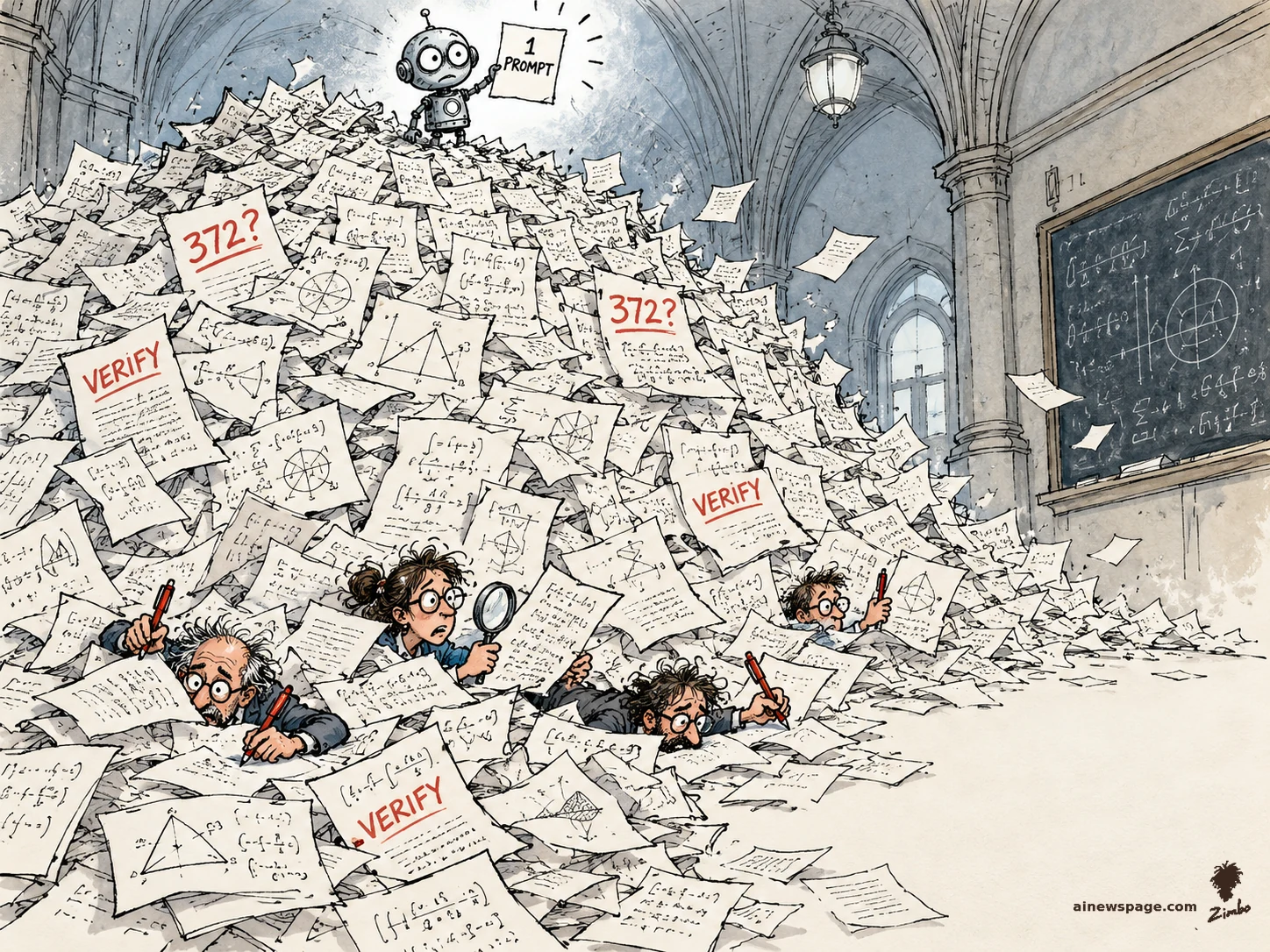
On October 6 OpenAI released 372 mathematical results produced by an internal frontier model, each of which the company says resolves or makes substantial progress on a major open question in mathematics or theoretical computer science. The results went up in a GitHub repository, many of them already formalized in Lean, the proof-checking language that validates a proof's logic — which makes those particular results all but certain to be correct, even if the whole deluge will take mathematicians months to parse.
The claimed results include a solution to the four-dimensional Kakeya conjecture, improvements to some of the world's most important computer algorithms, and actual progress toward the Riemann hypothesis. An OpenAI spokesperson told Scientific American that almost every result came from a single prompt handed to a single agent — a sharp contrast with the earlier Navier-Stokes solution built by a 10,000-strong agentic swarm — though some results might have taken multiple attempts, and MIT's Andrew Sutherland urged treating the one-prompt claims as unverified until the model is released and others can replicate them.
An independent advisory group of mathematicians had recommended that labs releasing AI results publish the model, the exact prompt, and the compute time behind each one; OpenAI disclosed only an average compute figure — roughly three hours of ChatGPT Pro thinking per result — and no prompts, saying it is not bound by the recommendations. Its own mathematicians do not yet understand many of the results, the company acknowledged, but it does not plan to slow down, arguing the problems are an indispensable test of whether its AI is really getting smarter.
The joke is the verification pile: Merv stands atop a mountain of proof papers holding a single slip reading '1 PROMPT,' while the mathematicians buried underneath dig through the stack with magnifying glasses, red pens, and stamps — every page marked '372?' and 'VERIFY.'
 THE NEW SECURITY GUARD
 THE REVOLVING DOOR
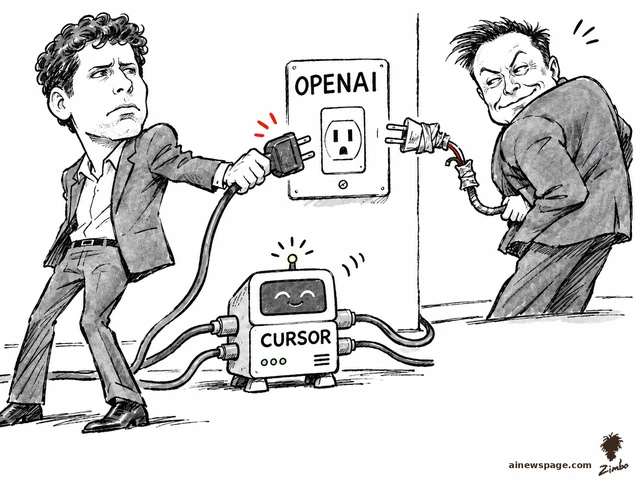 THE TRUST PLUG
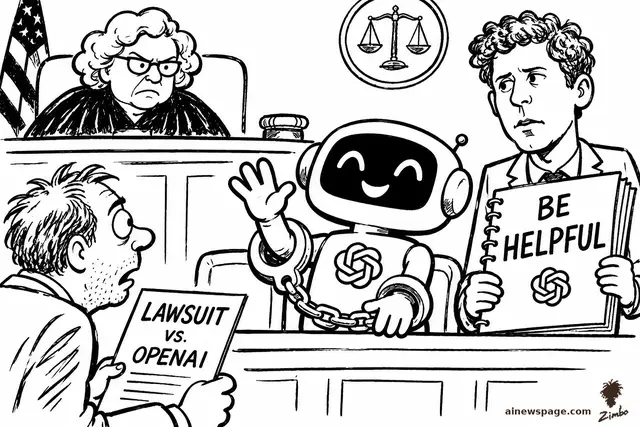 THE HELPFUL DEFENDANT