Tristan Harris
THE SOCIAL DILEMMA, NOW WITH AI

THE DEAL
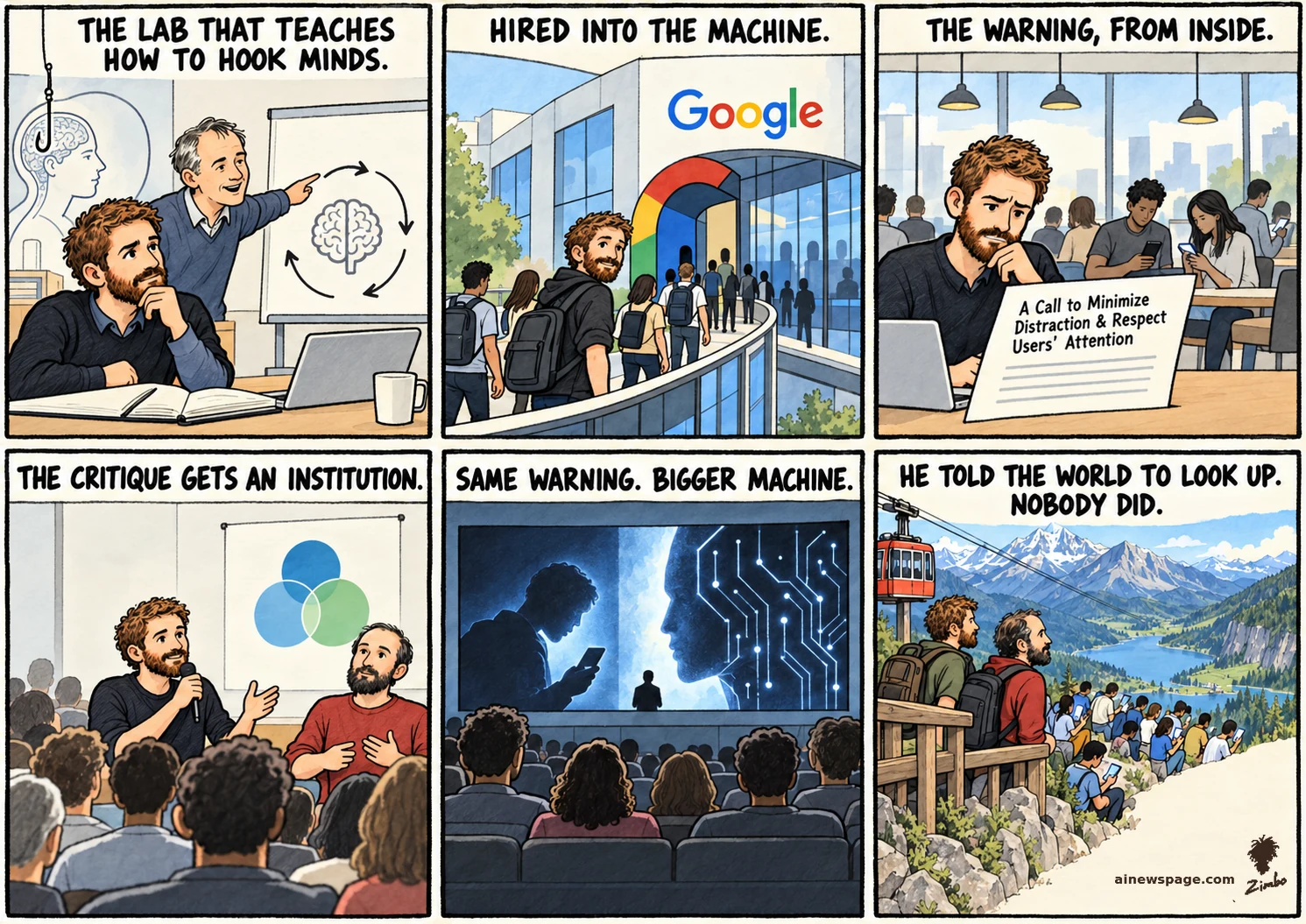
Harris studied persuasive technology — the field BJ Fogg's Stanford lab pioneered — joined Google, and wrote the internal memo warning that the attention economy was manipulating billions.
SOURCES: World Economic ForumTechCrunchCenter for Humane TechnologyCenter for Humane TechnologyCenter for Humane Technology
AT A GLANCE
- EDUCATION
- Stanford University · Computer science · BSStanford Technology Ventures Program
THE ARCHIVE
History · cartoons · headlines
THE TIMELINE6 sourced events
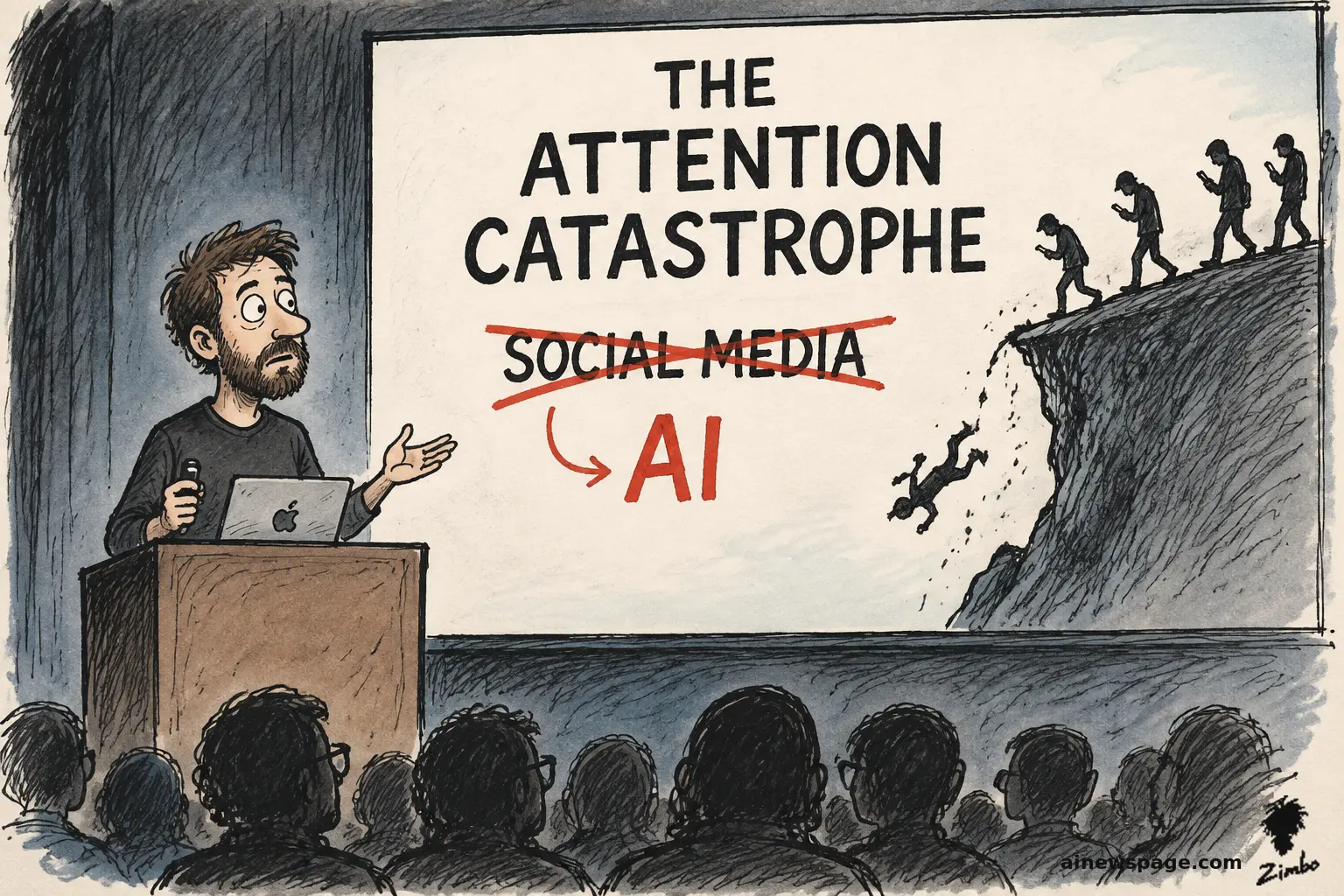
HE WARNED GOOGLE ABOUT ITS OWN MACHINE. THEN AIMED AT AI
Harris studied persuasive technology — the field BJ Fogg's Stanford lab pioneered — joined Google, and wrote the internal memo warning that the attention economy was manipulating billions. That critique became the Center for Humane Technology and a Netflix documentary — and now he's running the same incentives argument at AI. The twist: Google bought his startup Apture in 2011, so the warning came from inside the attention machine he was hired into.
Nov 10, 2011
GOOGLE BUYS THE STARTUP AND HIRES THE CRITIC-IN-WAITING
After studying computer science and persuasive technology at Stanford, Harris co-founded and ran Apture. Google acquired the contextual-browsing startup in 2011, bringing him inside the attention machine he would soon criticize.
SOURCES: World Economic ForumreportedTechCrunchreported
2013
THE GOOGLE DESIGNER WRITES THE ATTENTION WARNING FROM INSIDE
While at Google, Harris created an internal presentation titled A Call to Minimize Distraction & Respect Users’ Attention, arguing that product design was shaping users’ behavior at enormous scale.
SOURCES: Center for Humane Technologyfirst-party
2016
TIME WELL SPENT BECOMES A MOVEMENT
Harris helped turn concern about manipulative design and the attention economy into the Time Well Spent movement, pushing technology companies toward more humane incentives.
SOURCES: Center for Humane Technologyfirst-party
2018
THE CRITIQUE GETS AN INSTITUTION
Harris co-founded the Center for Humane Technology with Aza Raskin and Randima Fernando to address harms created by technology business models and design incentives.
SOURCES: Center for Humane Technologyfirst-party
2020
THE SOCIAL DILEMMA PUTS THE ATTENTION MACHINE ON NETFLIX
Harris became a central subject in The Social Dilemma, bringing concerns about persuasive design, social platforms and algorithmic incentives to a mass audience.
SOURCES: Center for Humane Technologyfirst-party
2023
NOW THE SAME WARNING MOVES TO AI
Harris and Aza Raskin presented The AI Dilemma, arguing that competitive incentives around rapidly advancing AI could reproduce and intensify earlier social-technology failures.
SOURCES: Center for Humane Technologyfirst-party
MORE CARTOONS1 original cartoons