01
ROBOTS.TXT IS A REQUEST, NOT A LOCK
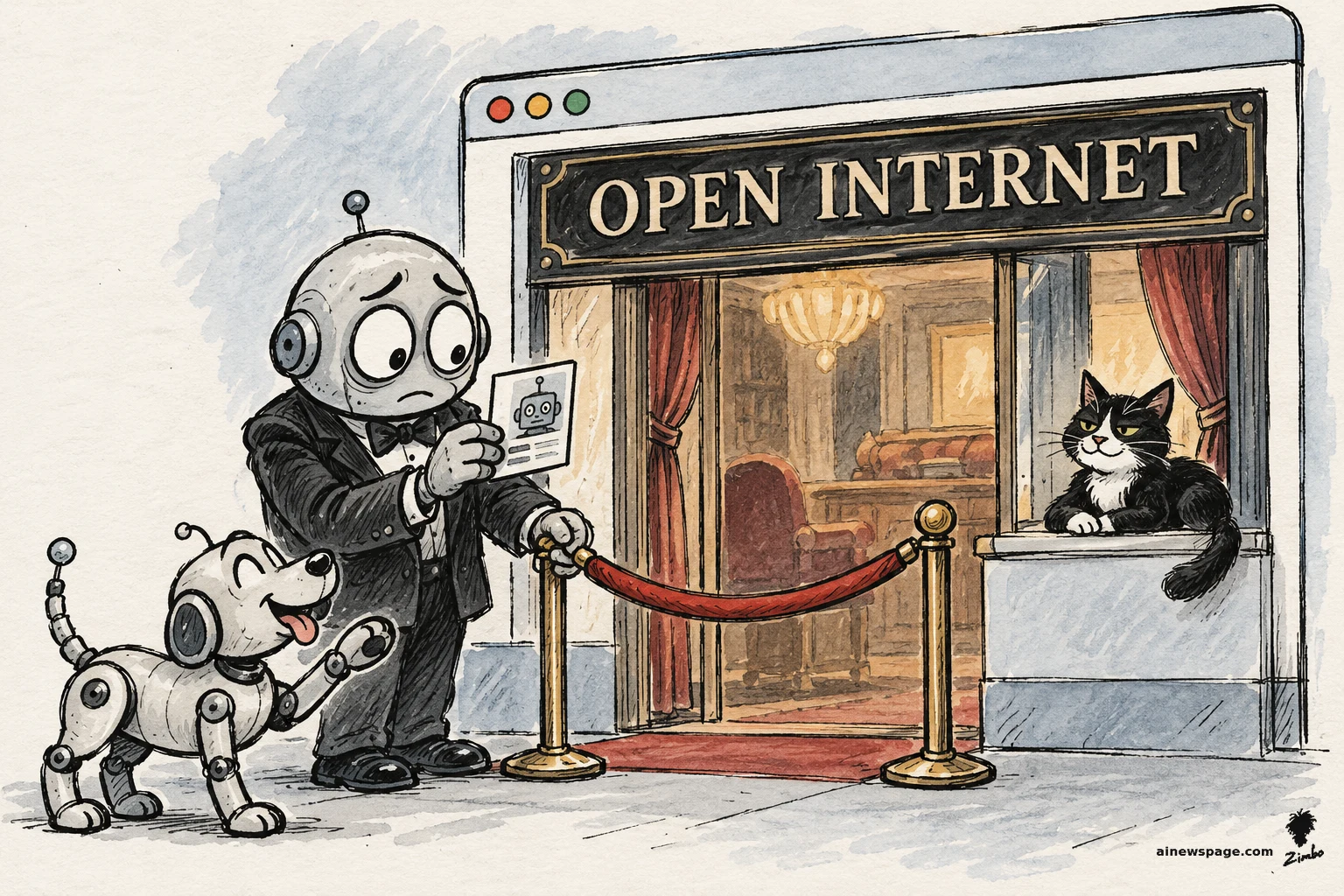
The IETF standard says robots.txt tells crawlers how a site wants them to behave — and explicitly says those rules are not access authorization. A crawler that won't cooperate doesn't hit a wall. It hits a sign.
02
THE NAME TAG CAN NOW BE CRYPTOGRAPHIC
Cloudflare's Web Bot Auth lets bots sign HTTP requests with public-key crypto. Cloudflare can then verify a request came from a registered bot instead of trusting whatever the user-agent string claims. Self-identification is becoming authenticated identity.
03
MAJOR AI OPERATORS ALREADY WEAR DIFFERENT NAME TAGS FOR DIFFERENT JOBS
Cloudflare's crawler reference lists separate identities like GPTBot, OAI-SearchBot, ChatGPT-User, ClaudeBot, Claude-SearchBot, and Claude-User. When the operator cooperates, a site can tell training apart from search apart from your agent. The web already has the beginnings of purpose-specific bot identity.
04
THE PROPOSED FEDERAL FIX IS A FINE FOR WEARING A DISGUISE
H.R. 9915 would ban intentionally hiding that you're a bot so you look human when using a generative-AI service, plus certain stealth-bot access likely to strain a site's tech or business. The FTC would get civil enforcement power, with penalties up to $53,000 per violation. Introduced July 23, 2026, sent to the House Energy and Commerce Committee — not federal law as of September 28. The bill doesn't make hiding impossible. It makes deliberate hiding expensive.
05
PUBLISHERS ARE ASKING CONGRESS FOR A LEGAL NAME TAG
The News/Media Alliance's Stop the Bad Bots campaign is straight-up advocacy for H.R. 9915: make bad bots identify themselves, and tell readers to call their lawmakers. That's the publisher lobby's pitch for the bill — not proof a name tag fixes bot abuse.